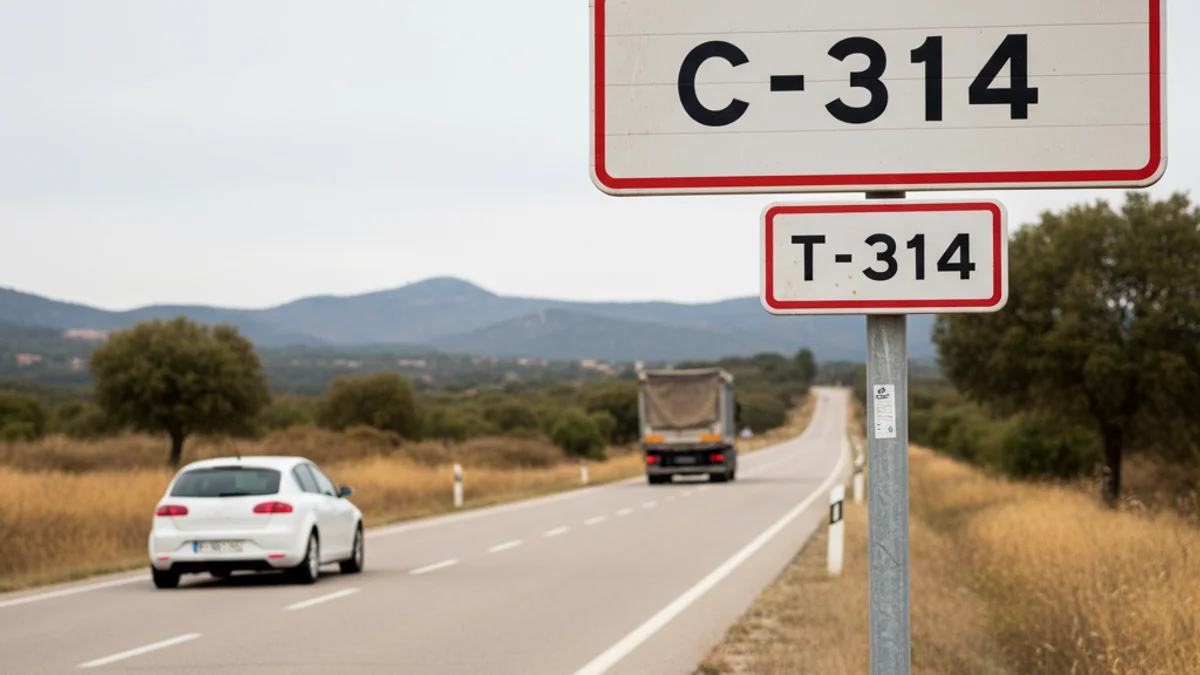
The T-314 has replaced the Arrabassada road (connecting Barcelona and Sant Cugat del Vallès), which was traditionally considered the most dangerous route. The director of the Catalan Traffic Service (Servei Català de Trànsit), Ramon Lamiel, confirmed that two fatalities and one serious injury recorded on this stretch were the key factors that significantly increased the risk indices.
“"On the T-314 there were two fatalities and one serious injury, facts that made the numbers jump."
In contrast, several roads have improved their safety and dropped out of the Top 10, such as the BV-1201 (between Olesa de Montserrat and Castellbisbal), the BP-2151, and the GI-643. However, new dangerous stretches have been incorporated, including the BC-5224 (between Manlleu and Torelló), the C-14 (between Artesa de Segre and Ponts), and the C-31 (between Sitges and Castelldefels), which appears in the ranking for the first time.
The report also focuses on motorcycle accident rates. The president of the RACC, Josep Mateu, highlighted that between 2022 and 2024, motorcycles were involved in 47% of all accidents resulting in fatalities or serious injuries in Catalonia, a matter of great concern to the organization.
“"The difference between the mobility they represent and the risk of suffering a motorcycle accident is extremely high, especially in the Barcelona metropolitan area."
Mateu added that 50% of serious and fatal motorcycle accidents are concentrated in only 12.9% of the analyzed network. The highest risk stretch for motorcyclists is the C-31 between El Prat and L'Hospitalet, followed by the junction of the A-2 with the AP-2, the B-10, the B-20, the C-32, and the stretch of the C-32 between Sitges and Esplugues de Llobregat.