The initiative, which seeks UNESCO recognition for flower carpets as Intangible Cultural Heritage, is in its final stage. The organization's evaluation body will meet in China between November 30 and December 5, 2026, to analyze and validate the submitted candidacies.
This week, the Baix Penedès region has been the epicenter of this art with the celebration of the II International Carpet Symposium, which addressed topics such as innovation and the preservation of this cultural expression. Vicenta Pallarès, president of the Catalan Federation of Carpet Makers, expressed her conviction in the success of the candidacy, emphasizing that UNESCO recognition will serve for the "safeguarding" and "future guarantee" of this cultural asset.
“"UNESCO recognition is not an end, it is a beginning; it implies subsequent obligations that guarantee the safeguarding of the asset."
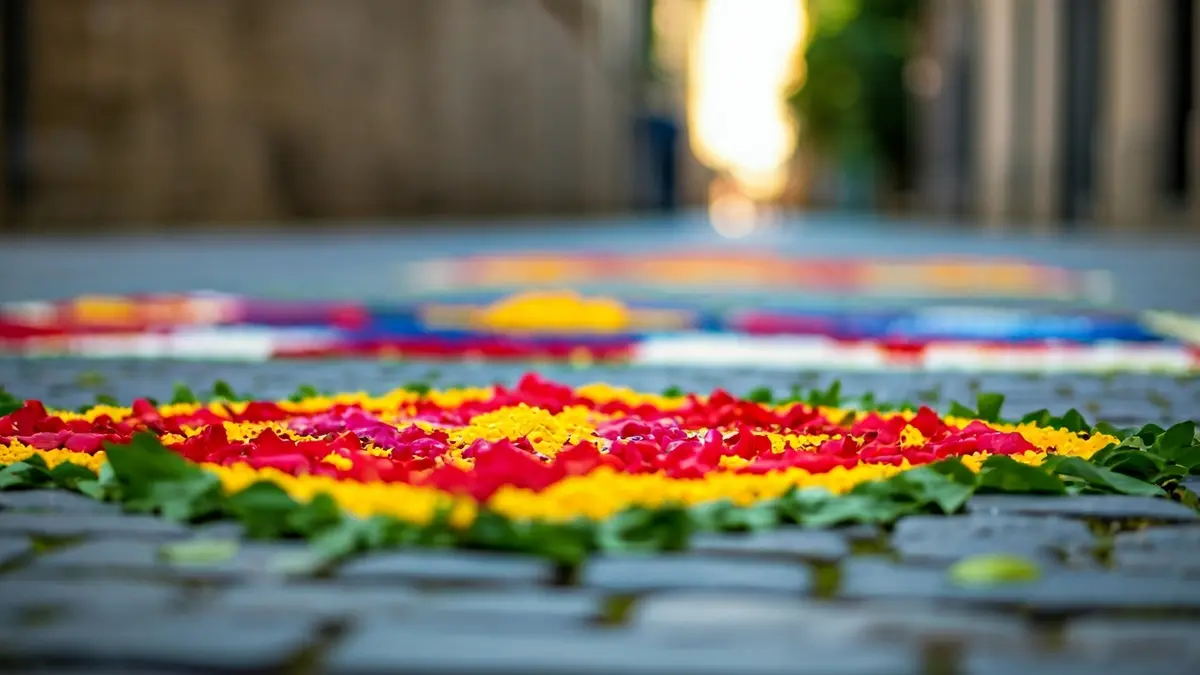
The candidacy, jointly promoted by Spain, Belgium, Italy, Malta, and Mexico, is the result of more than fifteen years of work. In Catalonia, carpets, traditionally made with flowers and linked to the Corpus Christi festivity, are a widespread practice, with an estimated 60% of towns engaging in their creation, according to the Federation.
In this context, Pallarès has called on collectives to federate to ensure the continuity of the tradition, as a lack of generational succession has led some towns to cease the practice. In Bellvei, for example, the tradition has been maintained uninterrupted for 65 years. Òscar Ripoll, president of the Friends of the Bellvei Carpets, highlighted efforts to involve families and create a group of "little carpet makers," even celebrating their day on August 9.
The II International Carpet Symposium, held in El Vendrell, and the III International Meeting of Carpet Makers, celebrated in Bellvei with the participation of fifteen groups from ten countries, served as a forum for exchanging experiences and discussing innovation and sustainability. Emphasis was placed on the use of new technologies for designs and the implementation of alternative materials such as calcium carbonate, pioneered in Bellvei, which allows for a greater variety of colors, as well as wood shavings and salt, ensuring a "sustainable" celebration where "not a single flower petal is wasted" in Catalonia.