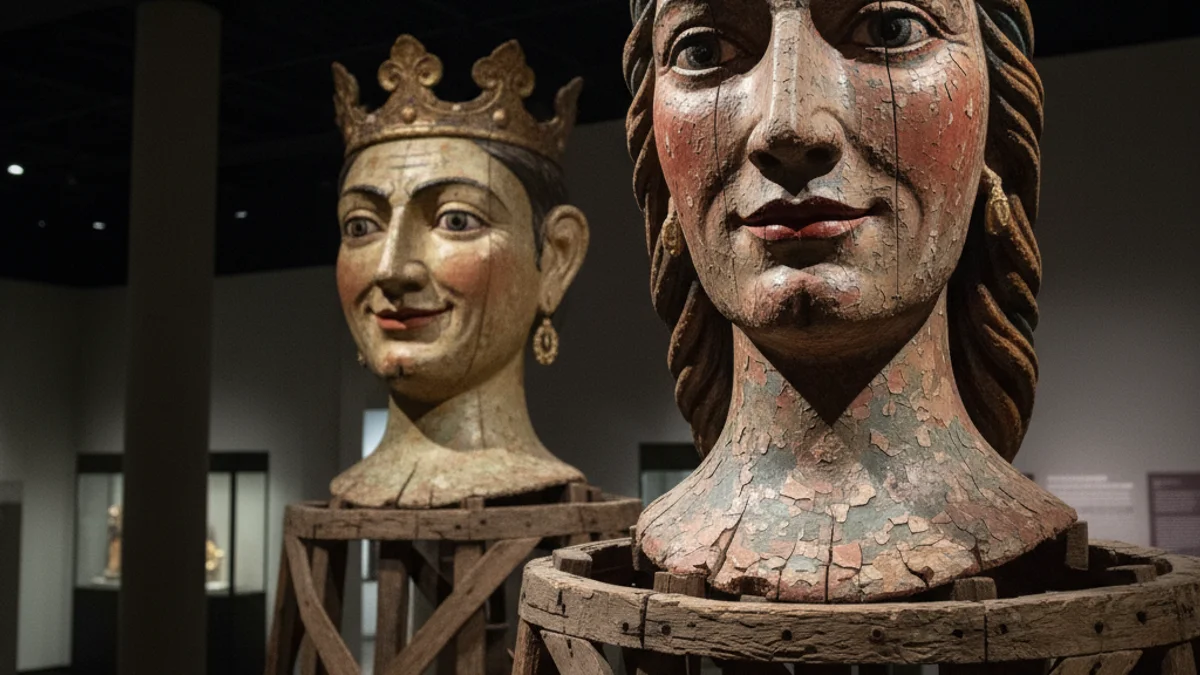
The historical, technical, and scientific analyses carried out, including tests at the Museo del Prado, have allowed the traditional dating of the giants, previously set at 1827, to be moved forward by almost two centuries.
The investigation concludes that the original heads come from religious figures that were part of the main altarpiece of the church of Sant Julià de l'Arboç, a work commissioned to the sculptor Domènec Rovira el Major between 1670 and 1678.
These pieces survived the destruction of the altarpiece during the Peninsular War (Guerra del Francès) and were reused around 1827, transforming them from religious to festive elements.
The restoration project revealed that the female giant, known as “the giantess of the six faces,” retains 75% of its original wooden structure, while the male giant is a totally original piece, significantly increasing the heritage value of the ensemble. The project was promoted by the L'Arboç City Council with the collaboration of the Colla de Gegants i Nans and the Generalitat de Catalunya.