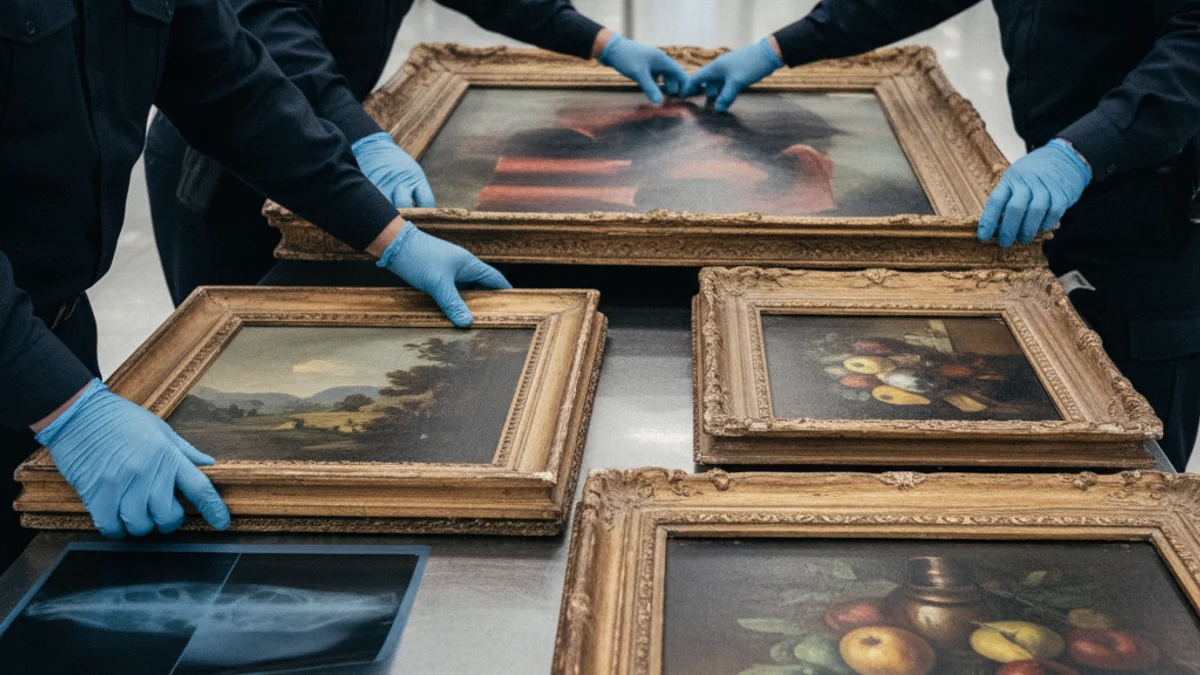
The discovery began during a passenger control at Madrid-Barajas Airport, where officers interviewed the traveler, who was coming from Barcelona-El Prat and was ultimately heading to Colombia. Inconsistent answers about the purpose of the trip and the excessive weight of the three decorative paintings raised suspicion.
Although initial drug tests conducted by the National Police yielded negative results, the officers decided to seize the paintings. They were subsequently transferred to the Barcelona Institute of Toxicology and Forensic Sciences, where the presence of 15 kg of cocaine was confirmed.
The cocaine was camouflaged under a thick layer of black, granulated epoxy resin, which prevented detection using standard reagents.
This ingenious camouflage technique used epoxy resin, a highly durable synthetic material, to conceal the substance. Furthermore, the drug had lost the characteristic color and odor of the alkaloid, appearing black and fine, which failed to react to standard police reagents.