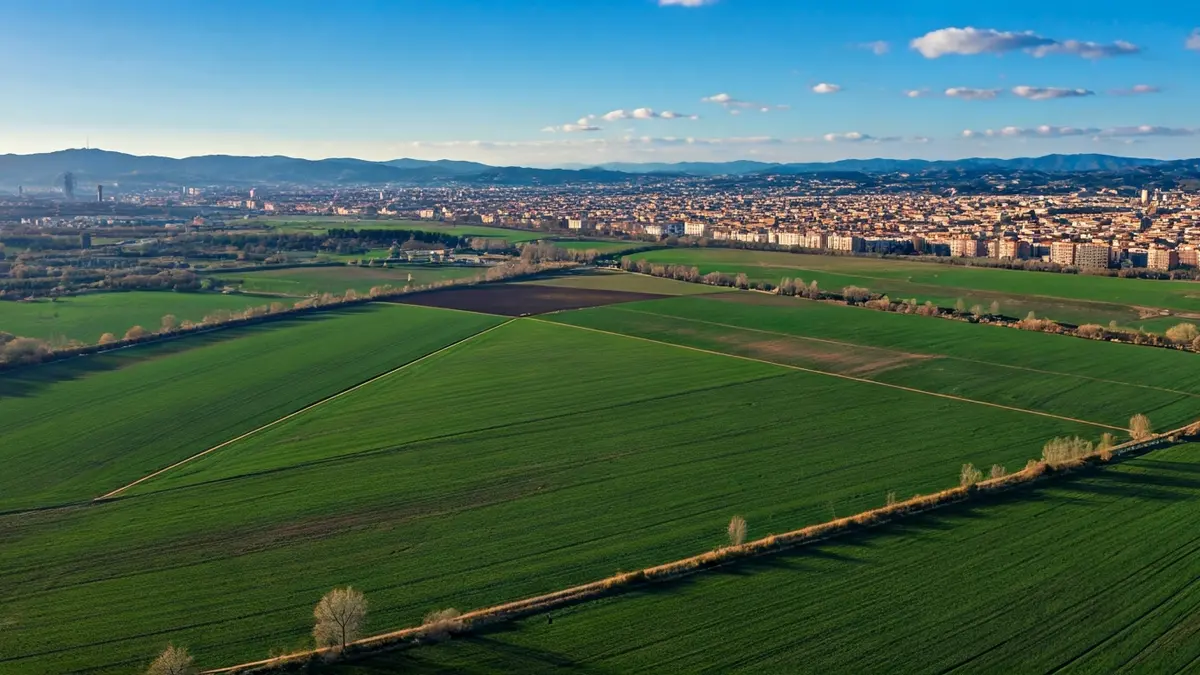
This regression of agricultural land, particularly noticeable between 2003 and 2008 during the real estate boom, has left local agriculture in a vulnerable position. Although the pace of transformation has stabilized in the last decade, the trend of loss has not been reversed, affecting areas such as the Collserola mountain range, the Marina mountain range, the Ordal mountain range, and the Baix Llobregat region.
Professor Johannes Langemeyer, lead researcher of the study from the Institute of Environmental Science and Technology at the UAB, attributes this decline to strong urban pressure and the construction of transport infrastructures, especially in the Llobregat delta. In higher areas, the lack of economic profitability has led to the abandonment of crops, transforming fields into forests.
“"The result is a loss of agricultural land that creates a higher dependence on imports, both nationally and globally."
Ferran Miralles, director of the Natural Spaces Service of the Urban Planning Policies Area of the Barcelona Metropolitan Area, agrees with the analysis and emphasizes the importance of self-sufficiency in food, water, and energy. According to Miralles, these elements must guide territorial decisions, prioritizing the protection of the most fertile soils.
“"These three things must be the driving force behind all decision-making in the territory; therefore, under no circumstances should other uses, which may also be necessary, compromise the most fertile soils. We must urbanize the worst lands."
In this context, the Barcelona Metropolitan Area is processing the Metropolitan Urban Master Plan (PDUM), expected to be approved in 2027. This plan includes measures to preserve natural and agricultural spaces, aiming to protect valuable agricultural land and reverse urbanization projects to recover non-developable land. Once approved, the PDUM will ensure that 51% of the metropolitan area remains non-developable land.
Initiatives such as the Baix Llobregat Agricultural Park and the L'Olivera cooperative, which is restoring olive cultivation in Collserola, as well as La Ponderosa in Nou Barris, demonstrate the viability of protecting and maintaining agricultural activity in metropolitan environments. Furthermore, restoring the mosaic of fields and forests on mountain slopes not only ensures food production but also minimizes fire risk and increases biodiversity.