This new edition of the Barcelona Electric Marine Show, taking place from April 10 to 12, will expand its space to include electric cars, motorcycles, bicycles, and scooters, offering the option to test the vehicles. The event, organized by the port alongside the National Association of Electric Boats (ANBE), will also gather the value chain of both sectors and feature innovation talks programmed by the International Electric Marine Association (IEMA).
“"Ports are the first line of defense against climate change."
The decarbonization of nautical activities is one step behind the automotive industry, according to Manel Cebrián. In this context, port director Olga Cerezo indicated that the Port Olímpic seeks to "lead the transformation of marinas towards sustainable nautical practices".
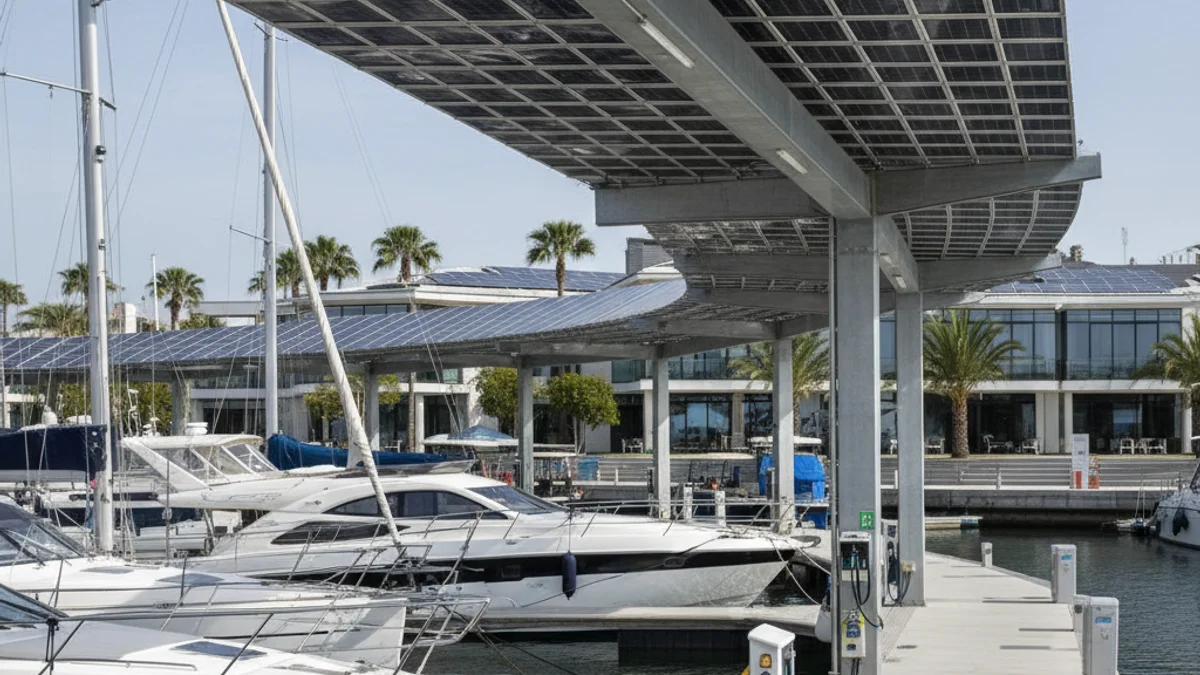
To promote this transition, the port has already built a large photovoltaic pergola with 392 panels, covering 765 square meters at the Moll de Gregal. This infrastructure allows boats to instantly consume electricity generated on-site. Furthermore, premises dedicated to blue economy companies are already 75% occupied.
Despite the transformation, the sector faces challenges, such as the limitation of port concessions and the advanced age of boat owners, factors that hinder investment, according to Jordi Caballé, Director of the Spanish Federation of Marinas. Nevertheless, the shift towards boat rentals, offering lower economic and environmental costs, is already driving change among charter companies.