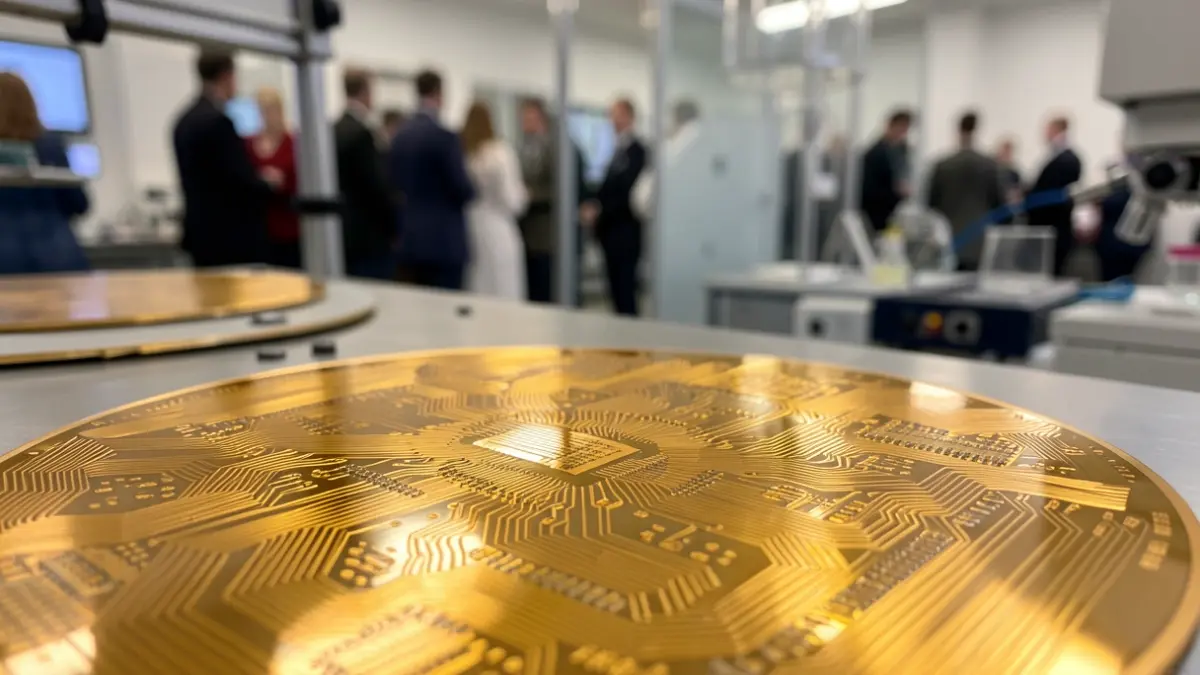
Founded in 1996, the IEEC has established itself as a leading center in space sciences and technologies and drives the Catalonia Space Strategy 2030. The event gathered over 100 individuals from the sector, including representatives from the Government of Catalonia, such as minister Núria Montserrat and secretary Maria Galindo, as well as authorities from the European Space Agency (ESA) like Xavier Benedicto.
The IEEC focuses its efforts on studying the cosmos and Earth through research, development, and technological innovation in space missions. Its research areas include astrophysics, cosmology, Earth observation and navigation, and space technology. Furthermore, it contributes to strengthening the Catalan space ecosystem by launching satellite missions, innovation programs, and talent promotion.
During the celebration, IEEC Director Xavier Luri reviewed the Institute's trajectory, highlighting the growth in scientific publications, which increased from 30 articles in 2000 to over 642 in 2025. Xavier Benedicto presented the evolution of the European space sector, with public budgets reaching 13.5 billion euros in 2025.
Josep Colomé, director of IEEC's APEC, detailed initiatives such as the creation of infrastructure like the Sant Esteve Teleport and a rocket engine test bench, as well as participation in international fairs. Kike Herrero, director of the Montsec Observatory, presented the new Jordi Torra Telescope, involving an investment of over 20 million euros.
The event featured round tables on research, with directors from units such as Domènec Espriu (ICCUB), Gonzalo Seco (CERES, UAB), Juan Ramos (CTE, UPC), and Aldo Serenelli (ICE-CSIC). The second round table focused on the Catalan space ecosystem, with representatives from companies like Sergi Figuerola (i2CAT), Mònica Roca (isardSAT), Carlos Álvarez (INDRA), and Joan Manel Casalta (SENER Aeroespacial).