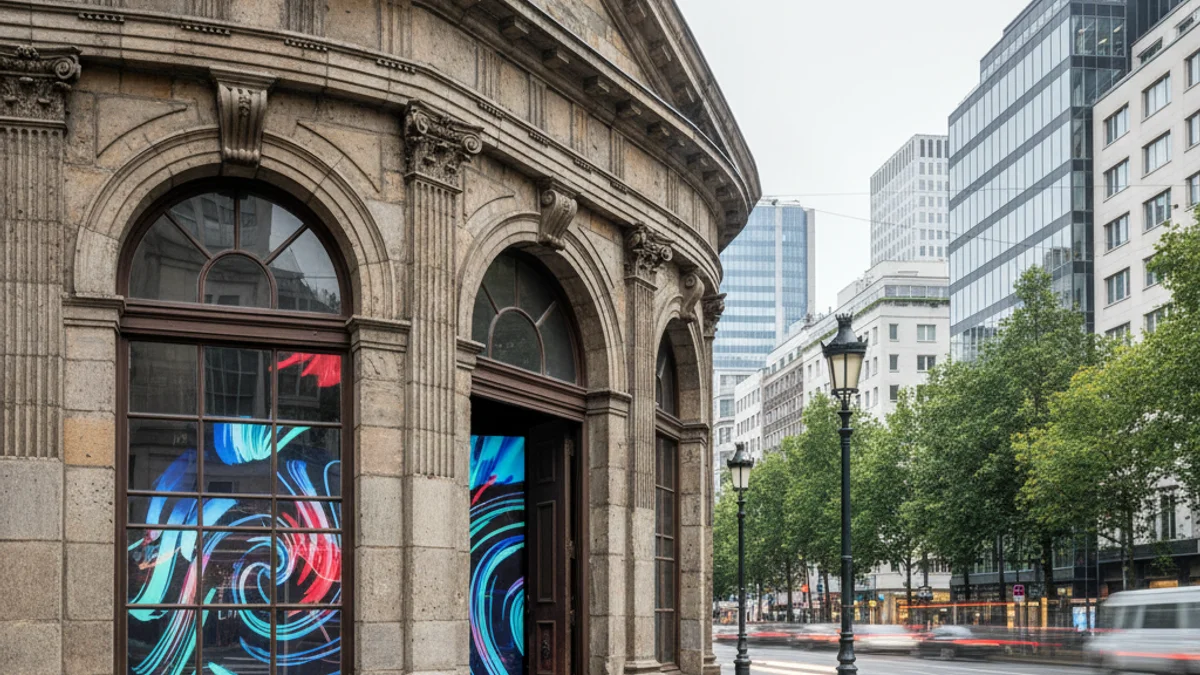
The historic building, constructed at the end of the 17th century on the remains of the royal artillery foundry, has been closed for over two decades since the Ministry of Defense sold it to the Generalitat in 2003. The restoration of the facades and roof finished a year ago, a preliminary step to the creation of the Catalunya Digital Art Center, announced in September 2023.
This transformation links the property on La Rambla with the Tres Xemeneies de Sant Adrià de Besòs project, the epicenter of the future Catalunya Media City, a complex dedicated to the audiovisual industry. The Foneria will act as a “testing ground” and “entry point” for this digital culture “country project.”
“"Our objective is for the Foneria to serve as a space to test projects and formats and, if appropriate, some of these can subsequently be transferred, with their own dynamic, to the Catalunya Media City."
The interior remodeling, awarded to the firm H Arquitectes, must begin before the end of 2026. The public opening in 2028 represents a slight delay compared to initial forecasts, which aimed for 2027. The total cost of the recovery is estimated at nearly 13 million euros, of which 1.8 million have already been invested in facades and roof.
The project plans for the ground and first floors (910 square meters) to be opened for exhibitions of works where digital technology plays a central role, including immersive installations. The two upper floors (716 square meters) will be reserved for workspaces and creation for artists and professionals in the digital sector.