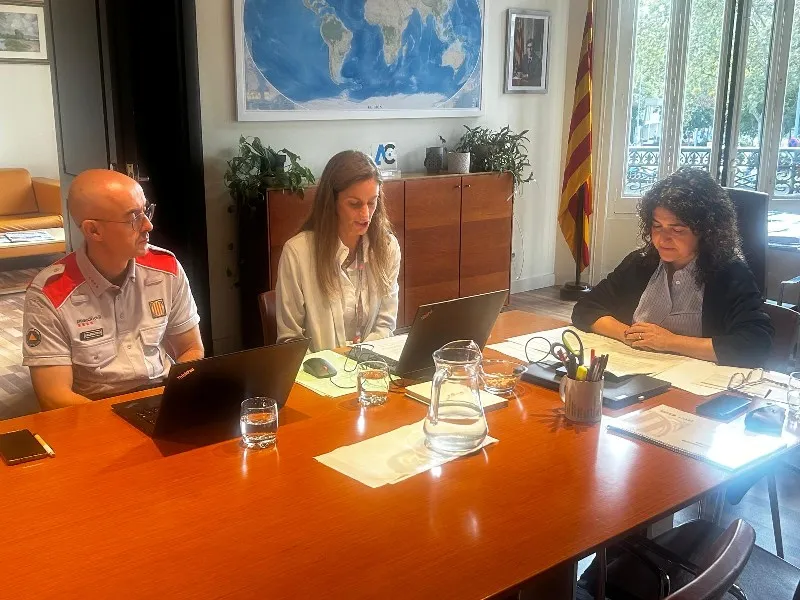
The return of Minister Esther Niubó to the Education Department, after two months of sick leave due to surgery, has not altered the state of negotiations with teacher unions, which have been stalled since last February. The Government remains firm on the agreement signed with UGT and CCOO, which represent less than 25% of the teaching staff.
This agreement is considered "insufficient" by the other unions, who have decided to escalate the conflict during this third quarter. USTEC, Intersindical, and CGT have launched a consultation for the entire teaching community, proposing four strike options, all of which are equal to or greater in scale than the protests held in February and March.
The online consultation asks teachers not only if they are willing to strike – a fact the unions take for granted – but also which of the four protest models they prefer. Options include a model similar to March's with four territorialized strikes and a unified day in Barcelona, an expanded version of this, an indefinite strike by territories, or an indefinite and unified stoppage. The goal is for the collective to decide the best strategy to force the Government to "reopen negotiations with the union majority".
“"The Government wanted to falsely close the conflict, but the conflict remains alive in the centers. Now it's time to collectively decide whether we repeat a strike model like March's or if we need to take another step."
The unions, leading the negotiation with the executive, have issued a statement encouraging debate on these options in teacher assemblies. These assemblies have gained relevance this year, with the participation of professionals who, in many cases, are not affiliated with any union. The results of the consultation will be made public next Tuesday, at which point the calendar for future protests will be defined.
Although Professors de Secundària (Asepc), the union with the most representation in public high schools, does not directly promote the consultation, it does participate in the protests. Union sources explained that their decision is based on operational reasons, seeking "maximum impact with minimum cost". Their proposal will be based on "opinions gathered" from the centers, and they are confident of reaching an agreement with the other unions.
Critical unions, including Asepc, insist that the agreed investment is far from the 6% established by the Catalan Education Law and that the 30% salary increase in the Generalitat's supplement does not compensate for the "loss of purchasing power" accumulated since the cuts. They demand improved salaries this academic year, reduced student-teacher ratios, less bureaucracy, and increased resources for inclusive education.