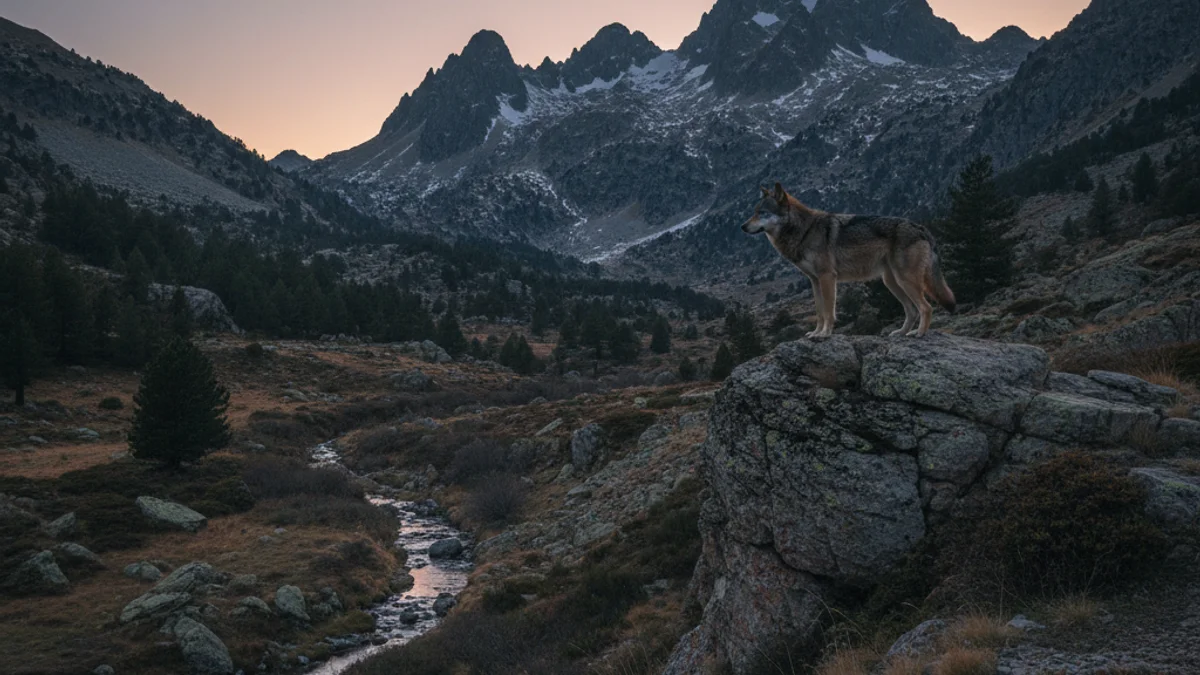
The repopulation of the wolf in Catalonia is part of a broader trend across the Iberian Peninsula, where populations north of the Duero River have experienced a notable increase. The species currently found in Catalonia, according to experts, originates from the Apennine mountains in Italy, having crossed much of Europe.
The pure Iberian wolf belongs to the subspecies Canis lupus signatus, named for the dark fur patch on its knees, resembling a signature. This subspecies is primarily found in Galicia, Asturias, Cantabria, and Castilla y León.
What the appropriate department must do is create a management plan, set urgent compensation for any damage it may cause, apply solutions for shepherds, and commit to coexisting with the wolf.
Managing this species requires concrete measures to minimize the impact on livestock farming. Proposed solutions include professional practices, the installation of enclosures, and the use of mastiff dogs. Historically, the wolf has been part of the landscape, naming places like the “Clot del Llop” in our region.
Despite the fear it inspires in the collective imagination, the wolf is a timid animal that generally flees from humans, unless injured or extremely hungry. The current goal is coexistence and preventing the return of capture or poisoning practices.