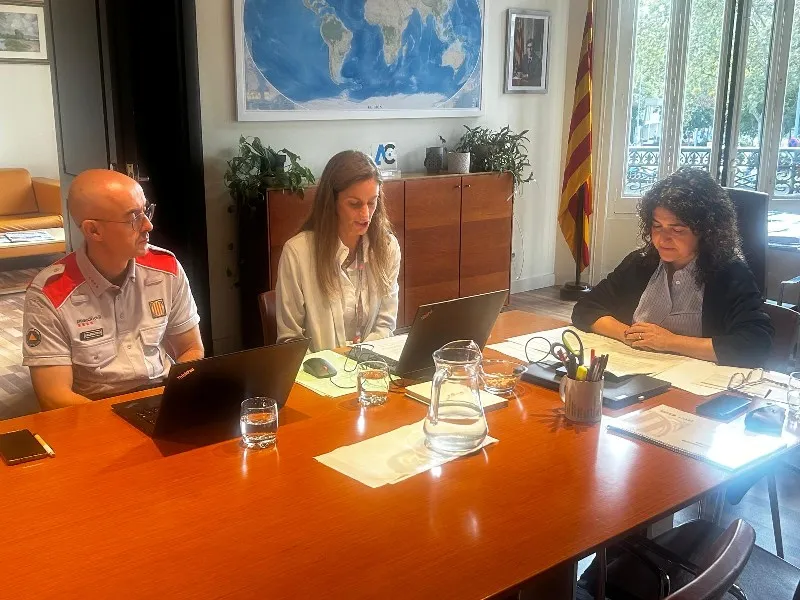
The organization, representing Barcelona, Montcada i Reixac, Santa Coloma de Gramenet, Sant Adrià de Besòs, and Badalona, has set 2026 as the deadline for action. During an event at the UGT headquarters, the unions CC.OO. and UGT officially joined the platform.
“"It is necessary to create real metropolitan governance in the Baix Besòs axis that provides articulated and coordinated responses to the neighbors' problems."
Regarding housing, the movement calls for a specific Sectoral Territorial Plan. Key proposals include increasing housing density at the Tres Xemeneies site and rehabilitating neighborhoods like La Mina and Serra d'en Mena, as well as tackling shantytowns in Montcada i Reixac.
In terms of mobility, demands include the extension of metro L1 in Badalona, the connection of L3 and L4, and the arrival of the Tram at Badalona port. They also advocate for moving the R1 train line inland between La Sagrera and Montgat by 2040.
Baix Besòs is no longer the backyard; we are a key piece of Catalonia that demands investment and respect.
Finally, the group highlighted health and environmental needs, such as the construction of the Ernest Lluch Hospital and the Sant Crist health center. They also demand the decontamination of La Mora beach and fixing a water leak active since 2008.