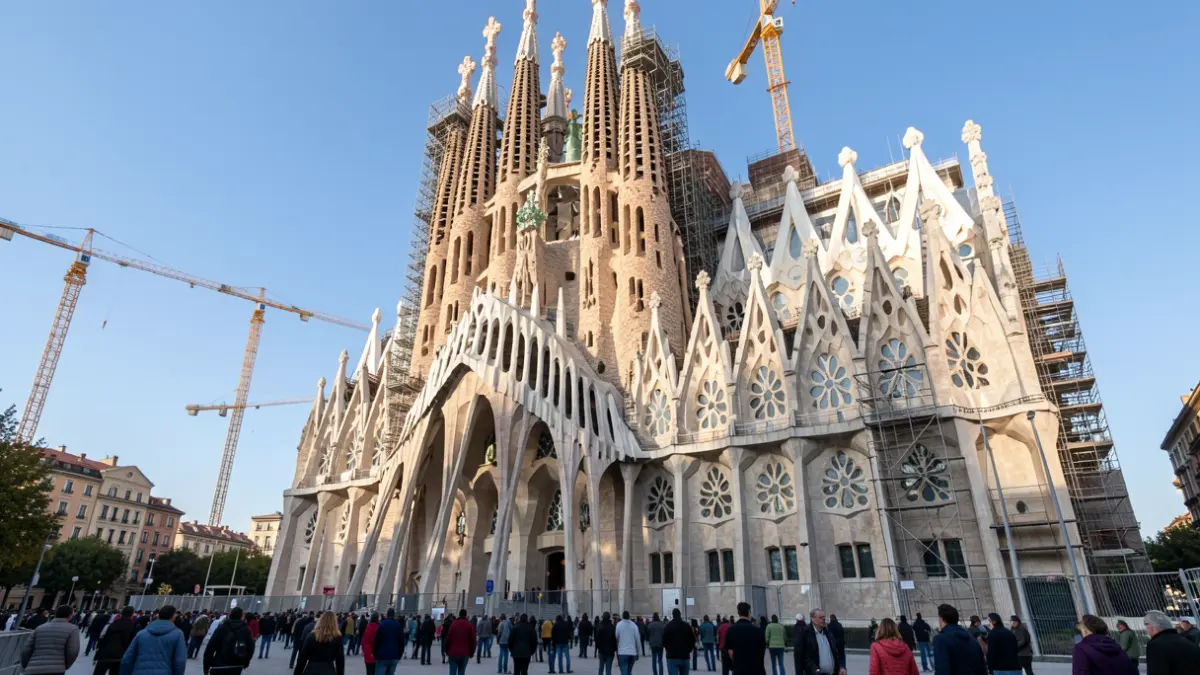
The first official meeting between the municipal government, led by the Eixample councilor, Jordi Valls, and representatives of the neighborhood association and the platform of those affected by the temple's construction took place last Thursday. No representative from the Sagrada Familia attended the meeting, as they maintain bilateral negotiations with the city council.
Despite the secrecy surrounding the meeting's content, both parties emphasize their willingness to reach an agreement, while acknowledging the process's difficulty. The main issues on the table include the number of residents affected by the staircase, their relocation or compensation, and who will bear the cost of an operation estimated to be between 150 and 200 million euros.
The conflict dates back to the Metropolitan General Plan of 1976, which envisioned a 60-meter-wide avenue in front of the temple, requiring the demolition of affected houses. Subsequent proposals have aimed to reduce this impact, but it remains unclear if the current project maintains this limitation.
A key challenge is to precisely define the affected area and determine how many residents will opt for compensation versus needing relocation. The capacity of the plot acquired by the Sagrada Familia in 2019 is a factor to consider for potential new residential buildings.