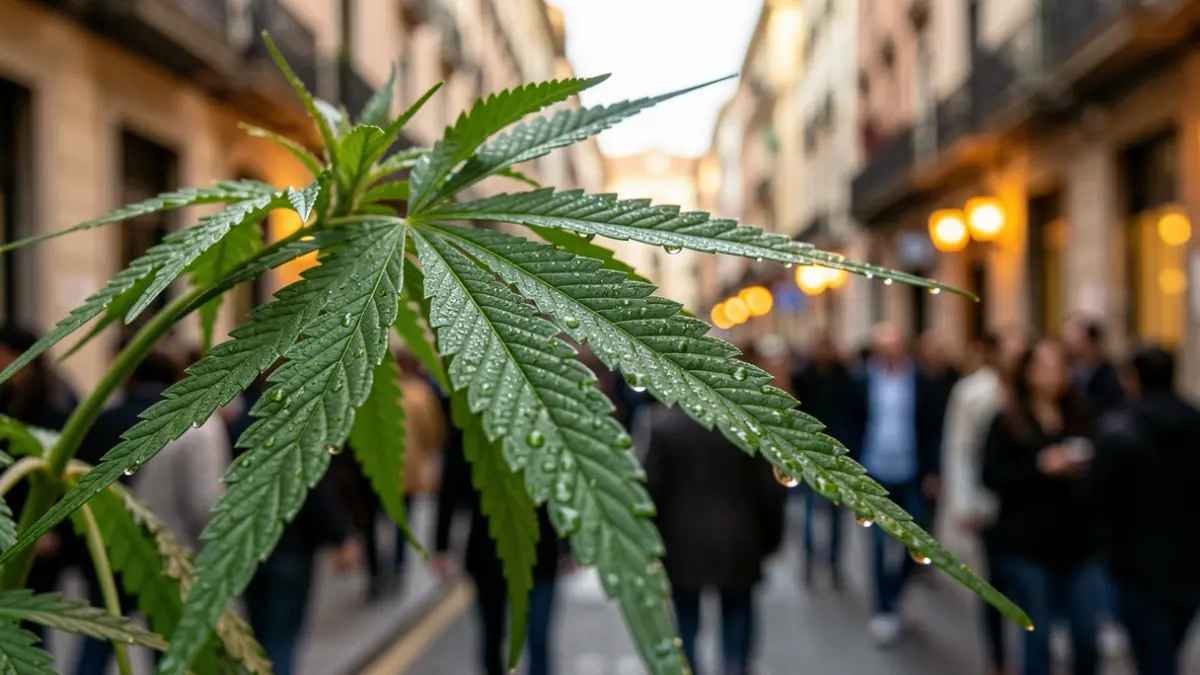
The Mossos d'Esquadra point to Barcelona's cannabis clubs as an origin for the expansion of marijuana cultivation and consumption in Catalonia, which has become a European hub. These spaces, which emerged to defend consumer rights, have been infiltrated by organized crime to mask drug trafficking. Since 2012, the number of clubs has remained stable at around 200.
The Barcelona City Council, with the arrival of Collboni, set a goal to close these establishments. Three years later, the situation has not changed significantly. Albert Batlle, Barcelona's Head of Security, stated that they will continue to pressure an activity that should not have a place in the city, during the presentation of the new anti-drug plan.
The new municipal plan, named plan Druida, is based on five transversal axes: points of sale, administrative action, road safety, healthcare assistance, and awareness. Pressure on cannabis clubs is a key point, although it has not yet yielded the expected results. Batlle lamented the "excess of regulatory guarantees" that hinder closures, as judicial resolutions often protect them. The Guardia Urbana employs a dual strategy: administrative, which is slower, and criminal, which will be intensified.
Cannabis is the most reported drug on the streets of Barcelona. Authorities warn of serious health consequences due to the increased psychoactivity of marijuana. According to police sources, clubs are no longer just places for occasional consumption or purchase, but a "contact point" for trafficking in Europe. Although the number of members has decreased from the 20,000 at their peak, associations continue to exist as private social clubs.
The Druida plan also addresses road safety, with over 1,000 people reported last year for driving under the influence of drugs. A recent fatal accident in Barcelona, where the driver responsible had consumed "laughing gas," highlights the severity of this issue.
The new strategy includes technological improvements with a command dashboard of monitoring indicators, which will track drug trafficking through arrests, administrative infractions, socio-health data, and roadside checks, as well as information related to cannabis associations and grow shops.