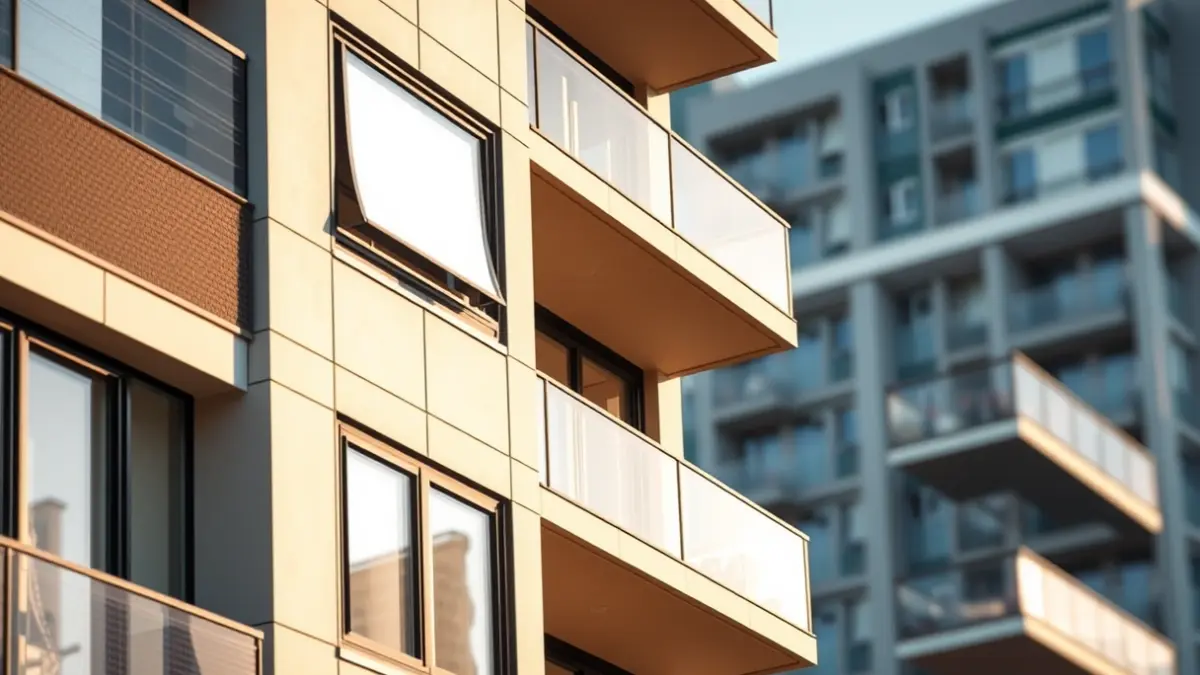
The call for applications, published in the Butlletí Oficial de la Província de Barcelona (BOPB) on February 23, 2026, focuses on transforming these blind walls that often disfigure neighborhoods. The program seeks to promote the rehabilitation and restoration of the built environment with environmental sustainability criteria.
The subsidies are designed for the rehabilitation of party walls visible from public roads or collective spaces. It is essential that the works include thermal insulation and an architectural integration project. The goal is to convert these walls into real facades that provide energy efficiency and visually integrate with the surroundings.
The greatest incentive is offered for projects that, in addition to landscape integration and insulation, include new openings such as windows, French doors, or balconies, with a minimum total area of 4 m². In these cases, the aid covers 50% of the cost, with a cap of 70,000 euros. For simpler interventions, without new openings, the subsidy is reduced to 30% of the action, with a maximum of 30,000 euros.
Technical regulations require party walls to have a facade-like finish, whose composition, colors, and materials must integrate into the surrounding landscape. The use of wood or recycled aluminum is prioritized for openings, and the use of PVC is explicitly prohibited.
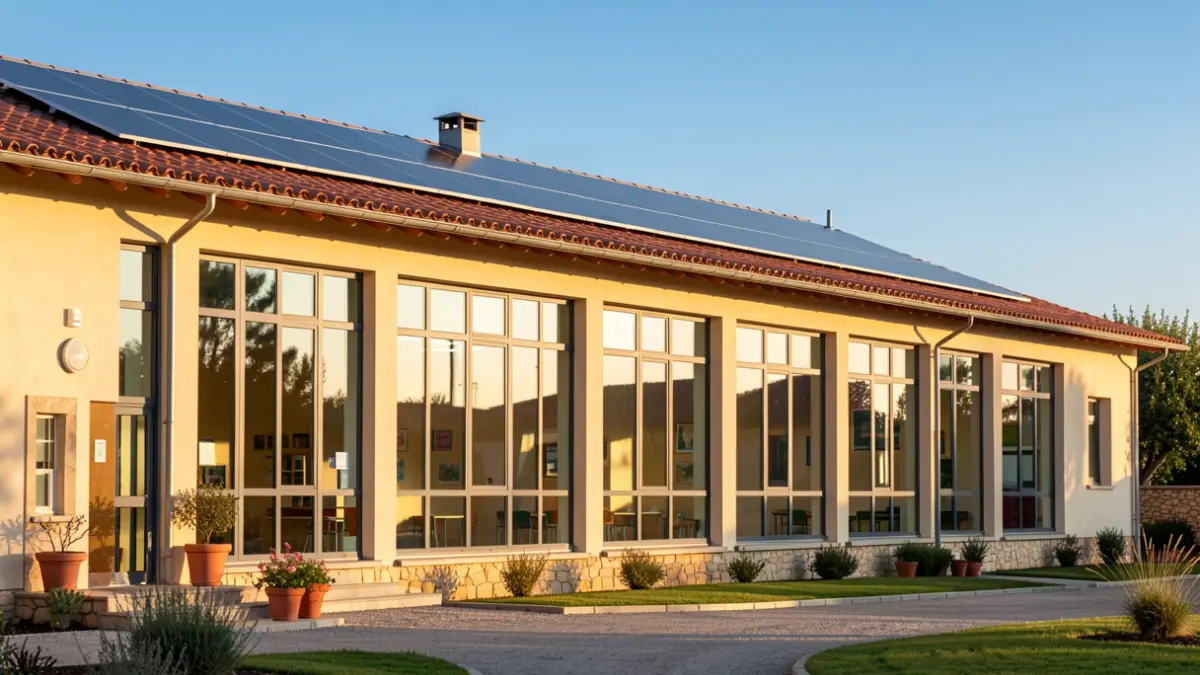
Additionally, cumulative bonuses can be added. The incorporation of a photovoltaic installation adds an extra 10% subsidy and an additional 10,000 euros to the cap. For large party walls (areas exceeding 450 m²), the cap increases by another 20,000 euros. If thermal insulation open to water vapor diffusion (such as wood fiber or cork) is chosen, an extra 10% subsidy and an additional 10,000 euros are applied to the cap.
The deadline for submitting the technical report application is November 16, 2026. The deadline to communicate the start of works is March 31, 2027. Owners, tenants, or usufructuaries of existing buildings or plots, whether individuals or private legal entities, can apply for these grants. In the case of collective residential properties, the agreement of the community of owners is essential.