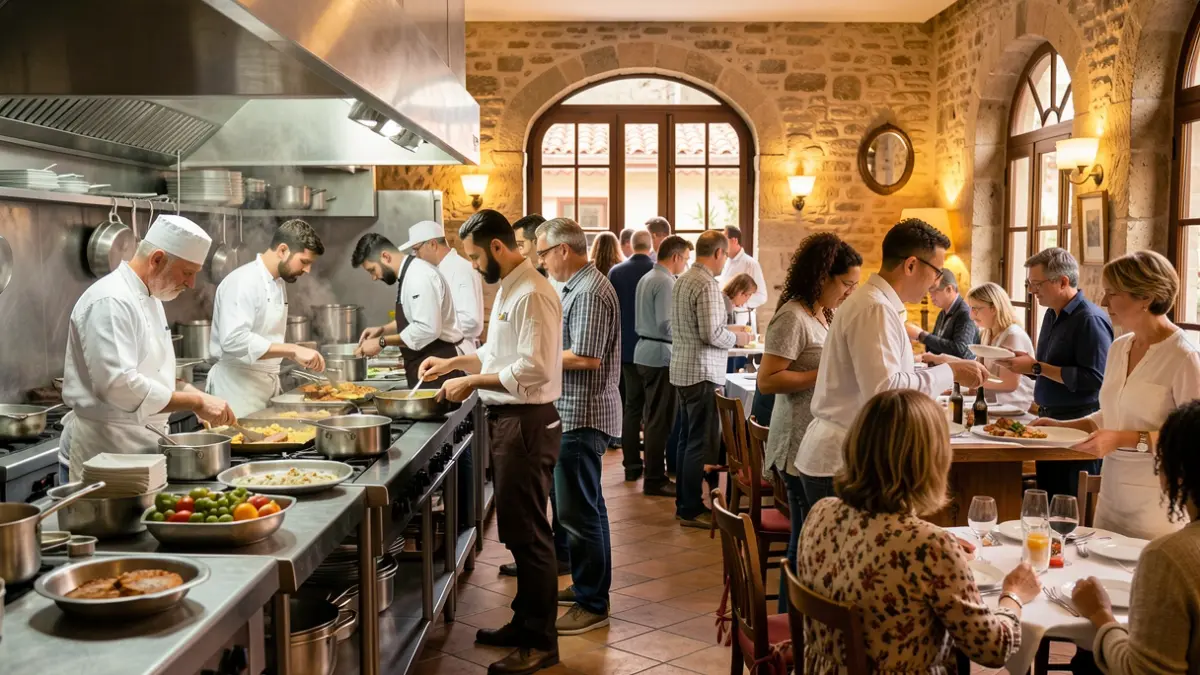
Barcelona's multiculturalism is increasingly reflected in its hospitality sector. According to the municipal survey on the Activity of the Restoration Sector 2025, nearly 44% of bar and restaurant owners are foreign, while Spanish nationals have fallen to 56.2%. Furthermore, for the first time, non-EU employees constitute the majority, representing 49.2% of the total workforce, surpassing Spanish employees (42.6%).
The sector's high turnover, with over a thousand transfers and new licenses annually, has reduced the average age of businesses to 11.4 years. Barely one in ten establishments opened before the year 2000.
Among the 43.8% of foreign owners, Chinese nationals are most prominent (18.6%), followed by Italians (4.6%), Pakistanis (2%), Argentinians (1.5%), and Indians (1.4%). 8.5% come from EU countries, while 35.2% are from other parts of the world.
International presence varies by license type: bars have a higher proportion of foreign owners (45.7%) than restaurants (42.4%). Real estate consultancy Inmo Olaya confirms this trend, indicating that during 2025, just over a third of managed transfers were for Spanish citizens, followed by Chinese, Pakistanis, and Italians.
Regarding employees, around 57% are foreign, with 49.2% of non-EU origin, reflecting a growing disinterest among the local population in working in this field, especially post-pandemic. The average number of employees per business is 5.9.
Hospitality establishments in Barcelona are relatively new: 77.1% opened between 2010 and 2024. Only 9.8% of premises predate the year 2000, highlighting the decline of long-standing restaurants.
The majority of businesses (68.1%) are open daily, with only 21.6% closing on Sundays. Fridays and Saturdays are the busiest days, while Tuesdays are the slowest. July and June are the most profitable months.
Although 54.3% of restaurateurs are satisfied with their business performance, only 30.3% report an increase in turnover. Key positive factors include expansions, new services, and having outdoor seating. Negative factors cited include location issues, rising prices, and competition.
The Barcelona Restoration Guild questions the significance of restrictive regulations and administrative inefficiency in the ranking of negative factors, as its members continuously report municipal obstacles and issues with terraces.