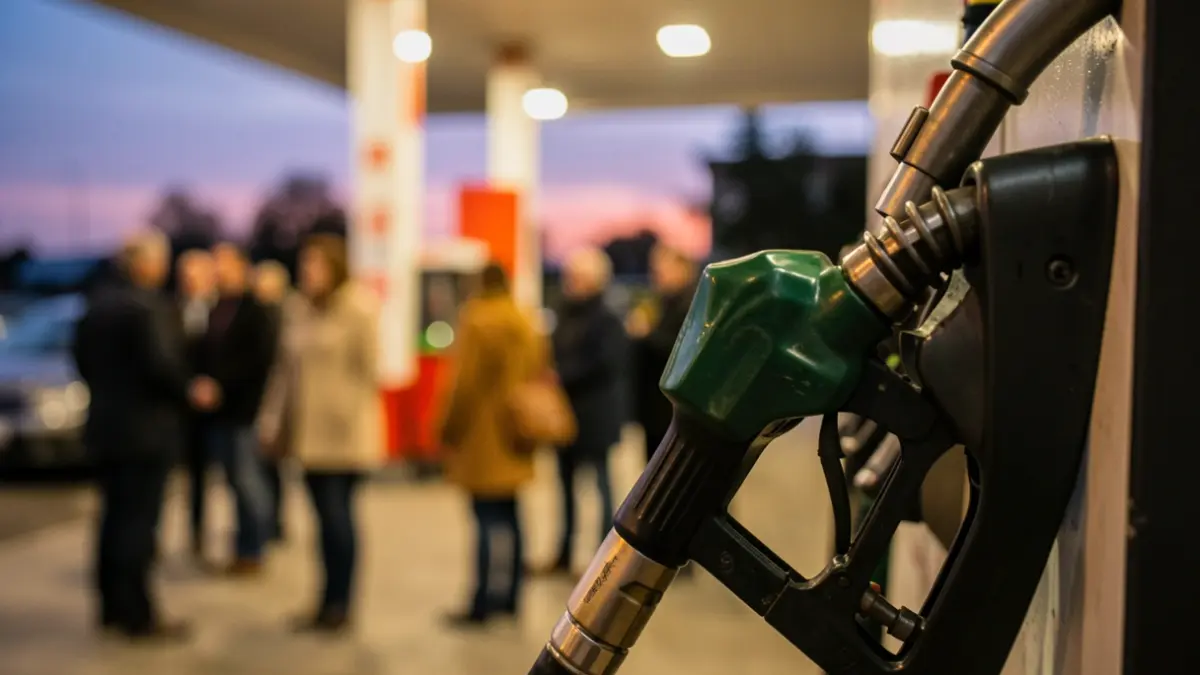
The fuel sector is highly diverse, with each gas station operating under unique conditions. "Every gas station is a world unto itself," observes Ramon Fitó, owner of the Fitó service station in Badalona, the oldest in Catalonia. While operators with commercial capacity and storage have a different outlook, those without their own refineries have seen their margins squeezed. "We pass on prices day by day. And, obviously, we've been forced to buy a more expensive product," explains Payá.
Fitó, with a single location and limited storage capacity, notes: "We cannot anticipate; we don't have the capacity to speculate on the product." Luis Nieves, president of Nieves Energia, advises smaller suppliers to adopt more careful "financial management" in the face of extreme price volatility, recommending they "secure supply contracts that, within a reasonable timeframe, allow for resource optimization."
Ramon Puigfel, general director of Puigfel Carburants and president of the Provincial Association of Service Stations of Barcelona (APESBcn), recalls difficult times with "daily price increases of 6, 7, 10 cents." His company secures supply through a contract with Repsol, yet public statements from figures like Donald Trump or the Iranian government have still had an impact. "If a sharp price drop caught you with full tanks, you were in trouble," he laments.
Gas stations, regardless of size, have contended with a competitive environment focused on securing business. Companies without refining capacity operate on tight margins, caught between market prices and competitor pricing. At times, as Payá points out, "stations haven't passed on all the increases to prices," and gasoline did not broadly reach two euros during the worst periods.
Puigfel explains that many stations have sold "at much lower margins than they would like" to maintain sales volume. Fitó adds that "there have been times when we've lost money," because "if you match wholesale prices by raising gasoline two cents more than the station next door, people leave. You can't exit the market."
The price hikes have impacted independent operators' businesses. Nieves observes that "consumers have become much more meticulous about deciding how much to pay and at which station they choose to refuel." Josep Castany, head of Sustainability and Energy at EsclatOil (part of the Bon Preu group), confirms this "high consumer sensitivity to price" following the crisis, stating that "customers have accepted that news prolonging conflict implies higher prices."
Meroil identifies that most end-users opt for "putting in less fuel but visiting the service station more often" to avoid days with the highest prices. Fitó regrets "drops in revenue" in favor of "low-cost" alternatives.
The reduction of VAT on fuels from 21% to 10% and the cut in the hydrocarbon tax to the minimum allowed by Europe have helped contain the final price, according to Puigfel, and revived consumption. The relief stems from the reduction being applied directly to station taxes, unlike the bonus during the war in Ukraine, which caused adaptation issues.
However, uncertainty surrounds the situation after June 30th, when the reductions are expected to expire. Payá warns that "high prices will continue" due to the geopolitical situation in the Strait of Hormuz and refinery shutdowns. Castany anticipates "volatility" in the short to medium term.
Oil companies have not detected supply risks despite strategic reserves activated by the International Energy Agency. Puigfel explains that price tension stems from competition for "less oil supply," as crude from the Hormuz region primarily goes to Asia.
Final sellers have noted "more conservative" periods from their suppliers, especially during the war's peak. According to Puigfel, this was more due to "forecasts of logistical problems" than actual tank shortages. Nieves downplays the macro effects in Spain, as independent players have turned to "national refining," while the situation is "much more complicated" outside the country.