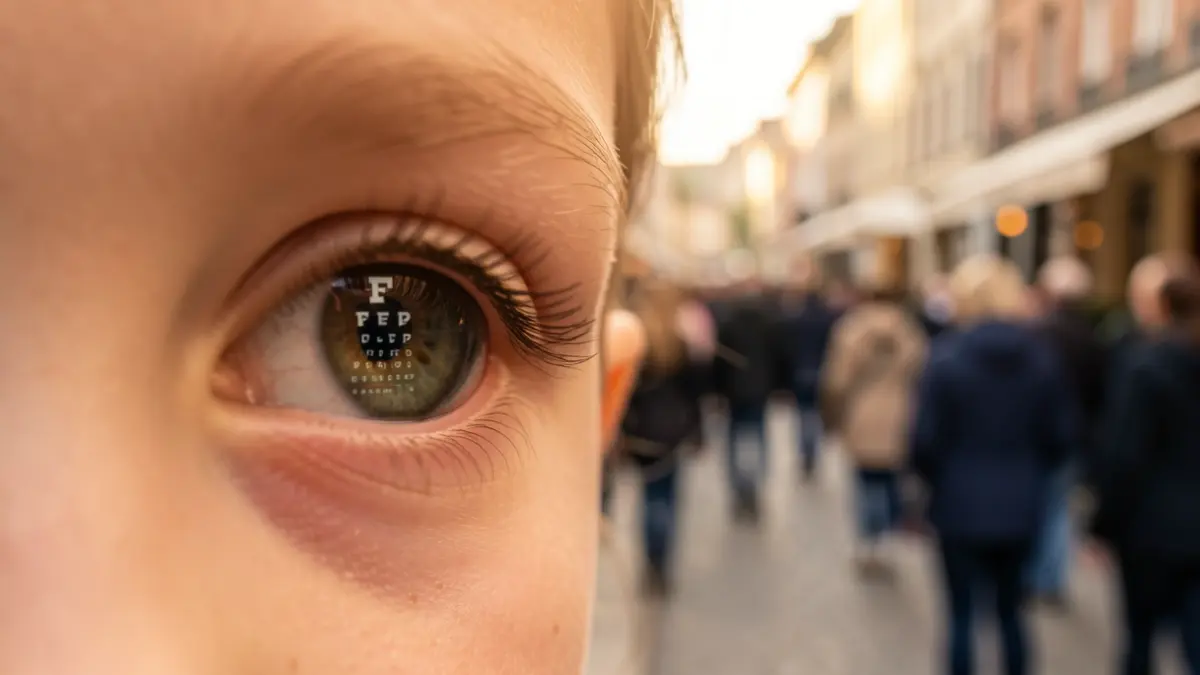
A study by the Vision, Optometry and Health (VOS) research group at the Polytechnic University of Catalonia - BarcelonaTech (UPC), linked to the Faculty of Optics and Optometry of Terrassa (FOOT), reveals a significant increase in myopia prevalence among children aged 8 to 12. The research, part of the Childhood Visual Health Cohort of Terrassa (CISVIT) project, indicates that myopia nearly triples in this age group, rising from 12.3% to 28.7% over three years.
Affected children experience an average annual worsening of refraction by 0.29 diopters. The study, involving over 2,500 participants, highlights that the age of myopia onset is a key determinant of long-term prognosis, with a tendency for faster progression in those who become myopic at earlier ages.
The research also points to significant differences based on gender and ethnic origin. Girls with myopia at early ages present a higher risk due to faster ocular growth progression compared to boys. Children of non-Caucasian ethnicity show a greater initial axial length of the eye.
According to researcher Laura Guisasola, it is possible to anticipate the onset of myopia by monitoring the growth of the eye's axial length, which occurs before myopia is detectable in the prescription. High-risk indicators identified include a combination of low hyperopia at age 8, greater axial length, and certain biometric proportions.
The study warns that environmental and behavioral factors influence myopia development, such as prolonged screen use. Conversely, spending more time outdoors and getting more sleep are associated with a lower risk. Researcher Núria Vila emphasizes the importance of these tools for public health policies.
The CISViT project proposes including pediatric screenings to detect risk before the problem arises, by measuring eye growth and analyzing children's habits during pediatric check-ups.