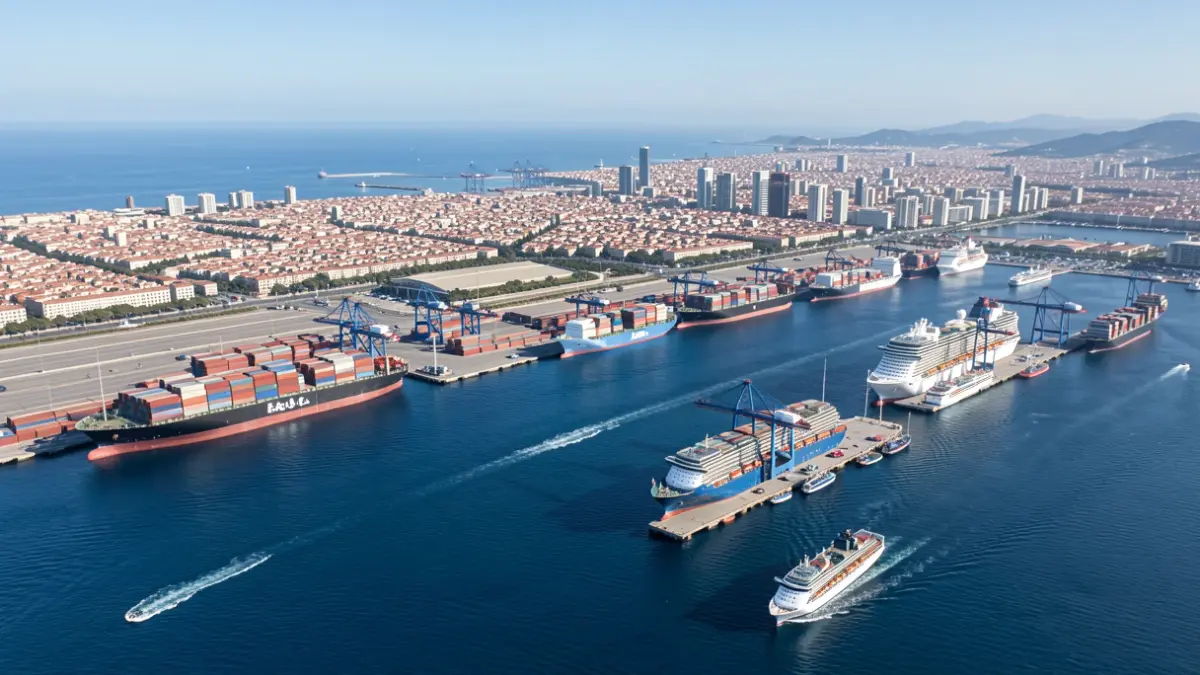
The Port of Barcelona, a key infrastructure for cargo and passenger traffic, faces significant concerns regarding security and foreign influence. Reports from the Higher Centre for National Defence Studies (CESEDEN) and the State Prosecutor's Office point to drug trafficking and the presence of Chinese companies as major challenges.
A study by CESEDEN titled "State Ports and National Defence" highlights the strategic importance of the Barcelona port, along with those of Algeciras, Valencia, and Las Palmas, as commercial and logistical hubs at European and global levels. These ports, despite their efficiency, are exposed to external risks, particularly due to their function as a bridge between continents and as a "security platform" for NATO and EU operations in the Mediterranean and Atlantic.
The report underscores the "growing foreign participation in the management of Spanish ports," with particular attention to Chinese and Middle Eastern companies. The case of Hutchinson, based in Hong Kong, which operates the Best terminal at the Port of Barcelona, is highlighted. Although it improves efficiency, this investment raises "concerns about economic sovereignty" and a risk of "strategic dependence" for national security.
Concurrently, the State Prosecutor's Office has reiterated its concern about drug entry through the port. The latest report indicates a disturbing increase in cocaine trafficking, with 25 tons seized in 2024, 31.17% more than the previous year. The prosecutor's office criticizes the insufficient investment in security despite the port's record profits, which reached 200 million euros in revenue in 2024.
The National Security Report also identifies the Port of Barcelona as a "main entry route for cocaine into the State," along with Algeciras and Valencia. These ports are considered "highways" for the entry of various drugs.