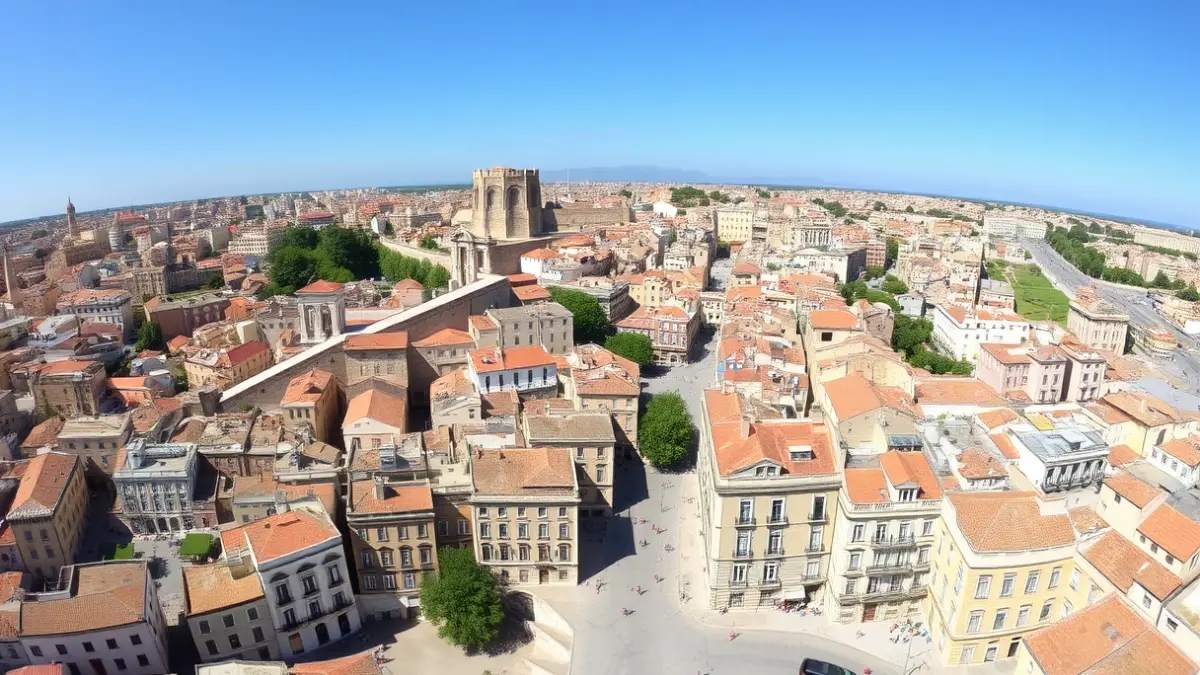
After nearly two years of analysis, the Barcelona City Council has outlined a roadmap for its central district. This new urban strategy identifies seven vertical and fifteen horizontal axes that will undergo interventions to strengthen daily life and the role of public space. A prominent example is the Raval-Universitat-Mar axis, which will connect the maritime area with the mountains, improving connectivity and the range of services.
The initiative responds to the need to transform a district with high population density (858 inhabitants per hectare), a large proportion of foreign residents (54%), and significant tourist activity (14,000 travelers per square kilometer). Despite this, Ciutat Vella has the lowest per capita income in the city (an average of 16,838 euros annually) and a lower life expectancy. The goal is to foster connections and a sense of belonging among residents, especially given that 69% of new inhabitants are foreign.
Strengthening daily life and the role of public space is precisely the driving force behind the changes the district is planning.
The commissioner for Ciutat Vella has indicated that the district's future involves modifying the Metropolitan General Plan (PGM) to gain residential land, among other measures. The action plan, developed with Foment de Ciutat Vella and Barcelona Regional, seeks a more integrated vision connected with residents, moving away from past large-scale urban interventions. The current approach aims to build community and reactivate the district, considering the existing urban planning as "exhausted".
Among the seven vertical axes of action, in addition to Raval-Universitat-Mar, are Passeig de Gràcia - Mar, which follows the historic decumanus route, and Girona-Mar, with the potential to connect the Eixample with the coast. The Joan de Borbó axis is also considered a coastal corridor, and Ciutadella as an "urban hinge" that includes one of Barcelona's main parks. Interventions will not be isolated but will seek to interrelate, such as the renovation of sports facilities linked to schools and the increase of urban green spaces, a necessity in a district where 47% of streets lack trees.