This finding, published in the journal Nature Communications, could offer new insights for understanding and treating chronic inflammatory diseases, as the debris of dying cells is a major cause of inflammation.
The E-cadherin complex, composed of this protein and three others, is essential for maintaining the structural integrity of epithelial tissues lining our skin, guts, and airways. Each cell adheres to its neighbor via this complex.
Verena Ruprecht's team observed in live zebrafish and mouse embryos that the cell adhesion machinery activates precisely when a dead cell comes into contact with epithelial cells.
“"We were intrigued to find out that epithelial cells repurpose their molecular adhesion machinery - the ‘glue’ that normally holds them together - to engulf dying cells."
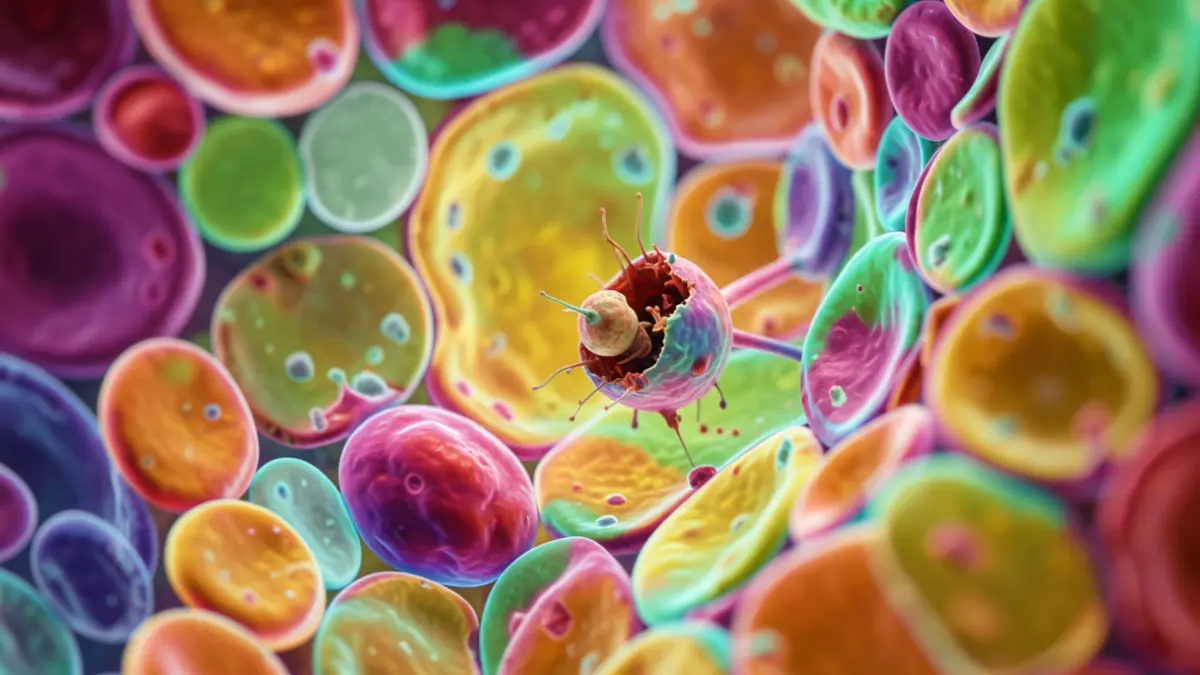
Epithelial cells manage to engulf dead cells thanks to the independent movement between their top and bottom surfaces. The bottom part stretches to surround the dead cell, while the top remains stable, maintaining the tissue's watertight barrier.
The study also details the role of associated proteins: one acts as a 'rope' to anchor the complex to the cell's skeleton, enabling force transmission, and another functions as a 'brake' for the contractile motor, being crucial for the process's stiffness and efficiency.
The research confirmed that this mechanism is shared across vertebrates, as a similar effect was observed in mouse embryos when E-cadherin was blocked, leaving dead cells uncleared.
This research builds upon previous work that already suggested embryos use epithelia as an early innate immune response to clear dying cells. The use of transparent and high-resolution embryos has been key to observing these cellular dynamics.
Although the study focuses on embryos, researchers consider it likely that the mechanism is operational in adult tissues, as E-cadherin is present in epithelia throughout the body and its structure is highly conserved across species. Its presence in the retina, colon, airways, and mammary gland reinforces this hypothesis.
The clinical significance lies in the consequences of failure in this clearance process: accumulated dead cells trigger chronic inflammation. The research highlights the dual necessity of an appropriate chemical signal and a physical cell deformation capacity for efficient cleanup.