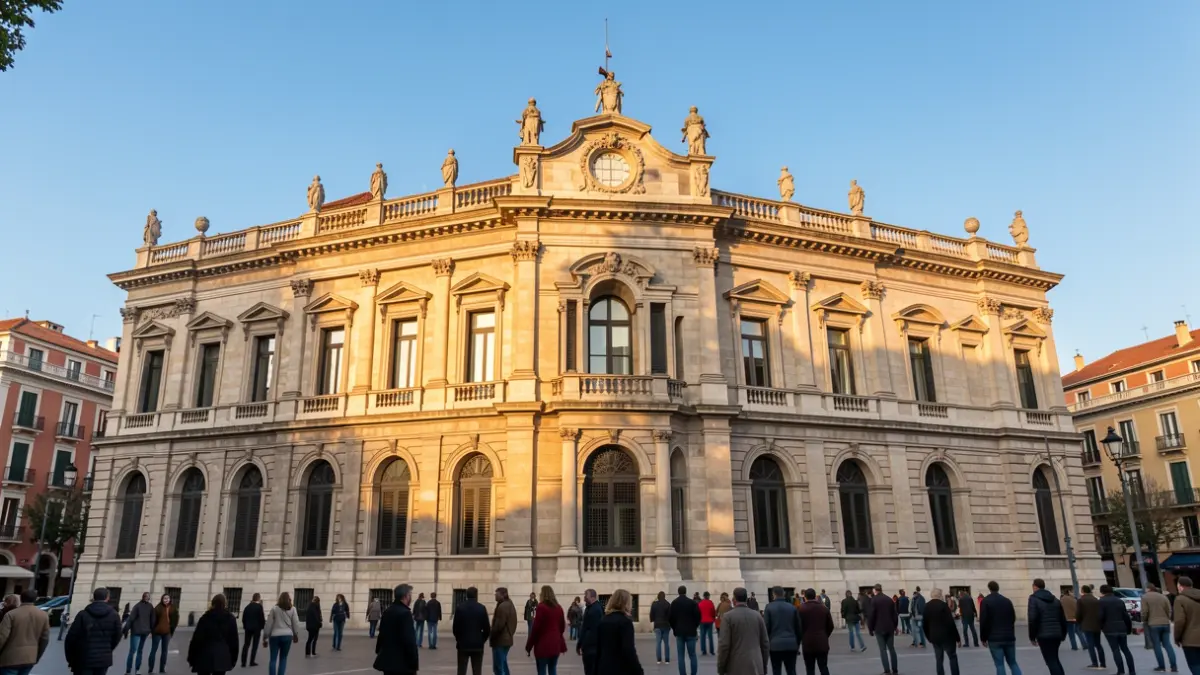
The exhibition, titled "Nicolau Maria Rubió i Tudurí (1891-1981). Landscape Lessons", is part of the programming for the World Capital of Architecture. It highlights the enduring relevance of Rubió i Tudurí's legacy at a time when the relationship between nature and city, green infrastructure, and sustainable urban planning are crucial topics.
The exhibition offers a journey through the work and thought of one of the 20th century's foremost architects, urban planners, and landscape designers. It features plans and objects from private collections, many of which are previously unseen or have never been publicly exhibited.
Organized by a team of architects and historian Montse Rivero, the exhibition delves into a legacy that remains pertinent to current urban challenges, such as climate change, green infrastructure, and the coexistence of the city and nature.
The exhibition is structured into six "landscape lessons", each introduced by a quote from Rubió i Tudurí. These reflections guide visitors through his transversal, critical, and innovative approach to urbanism, gardens, and territory.
The exhibition is complemented by the publication of the book "El llegat de Nicolau Maria Rubió i Tudurí, 100 anys després" (The Legacy of Nicolau Maria Rubió i Tudurí, 100 Years Later), a facsimile edition of his work "El problema de los espacios libres" (The Problem of Free Spaces), marking the centenary of its publication. The aim is to disseminate his legacy and figure.
The six lessons cover themes such as his international travels that inspired his thinking, the need for a metropolitan network of green spaces (his Barcelona Parks System), the theory of the Mediterranean garden, the garden as a work of art, his connection with modern architecture, and the importance of a comprehensive plan for the city.
Nicolau Maria Rubió i Tudurí was a key proponent of a new way of understanding the city, integrating landscape into urban planning long before these concepts became central to environmental policies. His proposals for the Barcelona Parks System and the integration of green spaces in urban development remain highly relevant.
The exhibition invites the public to discover this pioneering vision and reflect on how ideas formulated over a century ago continue to offer useful tools for a more liveable, resilient, and sustainable Barcelona.
The exhibition has been organized by Barcelona World Capital of Architecture, the Municipal Institute of Parks and Gardens, and the Official College of Architects of Catalonia.