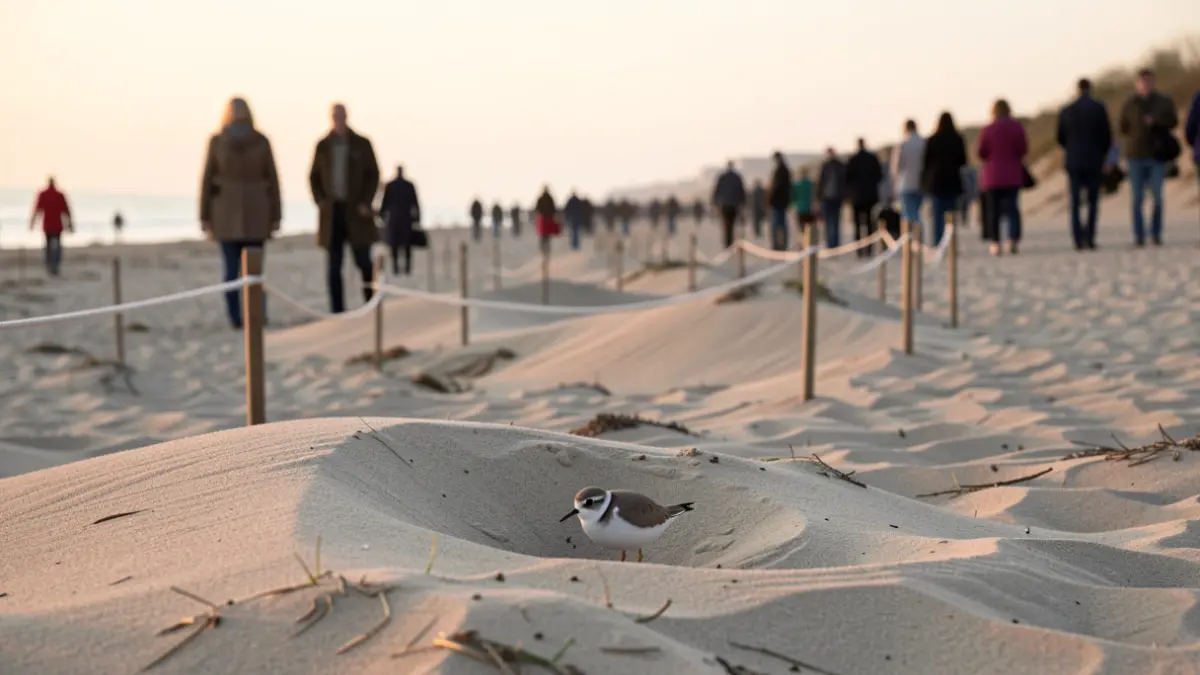
Protection measures implemented at the Aiguamolls de l'Empordà Natural Park, such as the partial closure of Can Comes beach in Castelló d'Empúries (Alt Empordà), have yielded positive results for the breeding of the Kentish Plover. One hundred breeding pairs have been counted, a historic figure for a protected species in decline across Spain.
According to the director of Aiguamolls, Ponç Feliu, seventy pairs were located in Aiguamolls and thirty more in Montgrí, the Medes Islands, and the Baix Ter. This population has significantly increased compared to the usual 40-50 pairs in recent years, demonstrating the effectiveness of the measures taken.
The Kentish Plover breeds between March and July, a key period that coincides with high human presence on beaches. Nests, camouflaged in the sand of dune areas, are vulnerable to human disturbance and the presence of unleashed dogs, which can prey on chicks. The closure of breeding areas aims to preserve their tranquility and highlight that beaches are living ecosystems.
The park's public use technician, Ivan Bustamante, detailed that, in addition to the closure of two kilometers of Can Comes, nests detected outside the marked area are also being demarcated. The work of park informers is crucial in raising visitor awareness about the importance of not entering these protected zones.
In addition to the Kentish Plover, protection measures have also led to the detection of a pair of Little Terns breeding at Can Comes, a species that historically nested in this area. This underscores the importance of preserving these ecosystems for the return of wildlife.