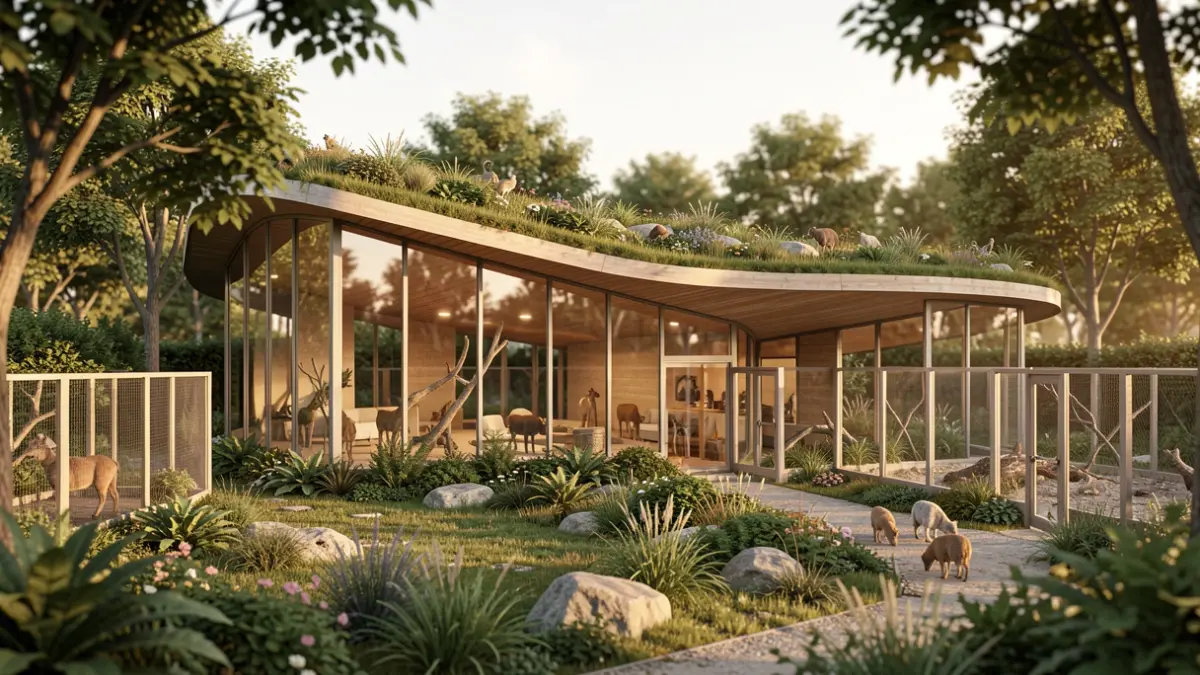
The Barcelona Zoo has announced the five finalist teams that will compete for the design and execution of the Bioscope, an ambitious facility that will address the origins and evolution of life on the planet. This new complex, covering almost 7,000 m², will combine innovative architectural elements with immersive experiences and the presence of animals.
With a budget of 18 million euros, financed by BSM, the Bioscope is scheduled to open its doors to the public in 2030. This initiative is key to the transformation plan of the Barcelona Zoo, which aims to establish itself as a reference center for biodiversity conservation, as well as scientific research and dissemination.
The international competition attracted 14 proposals, from which five internationally renowned teams have been selected. Among the finalists are B720 Arquitectura, led by Fermín Vázquez, along with Abacus, Lüchinger Meyer Partner, Èxit de Disseny, The Logical Zoo, and COMSA as associated constructor. Also participating are Pich-Aguilera Arquitectes with Kengo Kuma & Associates and Elecnor; Brullet de Luna i Associats with Vesta; Enric Ruiz Geli Project with Elisabeth Diller (from Diller Scofidio + Renfro), Philippe Rahm, Ralph Appelbaum, and Copcisa; and finally, Miquel Mariné with Baukunst and ACSA.
The design of the Bioscope includes a three-story building and an outdoor space. The proposed route will integrate museography with immersive experiences and installations featuring animals selected for their relevance in key evolutionary stages, such as amphibians, fish, reptiles, and invertebrates, or those coming from conservation projects.
The space is conceived as a center for learning and discovery for all audiences, but it also aims to be a driver for scientific research and collaboration with universities and conservation centers, promoting projects on biodiversity, animal welfare, and ecosystem preservation.