Marking the centenary of his death, Galdric Santana, director of the Gaudí Chair at the Polytechnic University of Catalonia (UPC), has brought to light drawings and calculations that had remained forgotten. These documents were saved from being burned in 1936 when Francesc Ràfols rescued them from the Sagrada Família workshop.
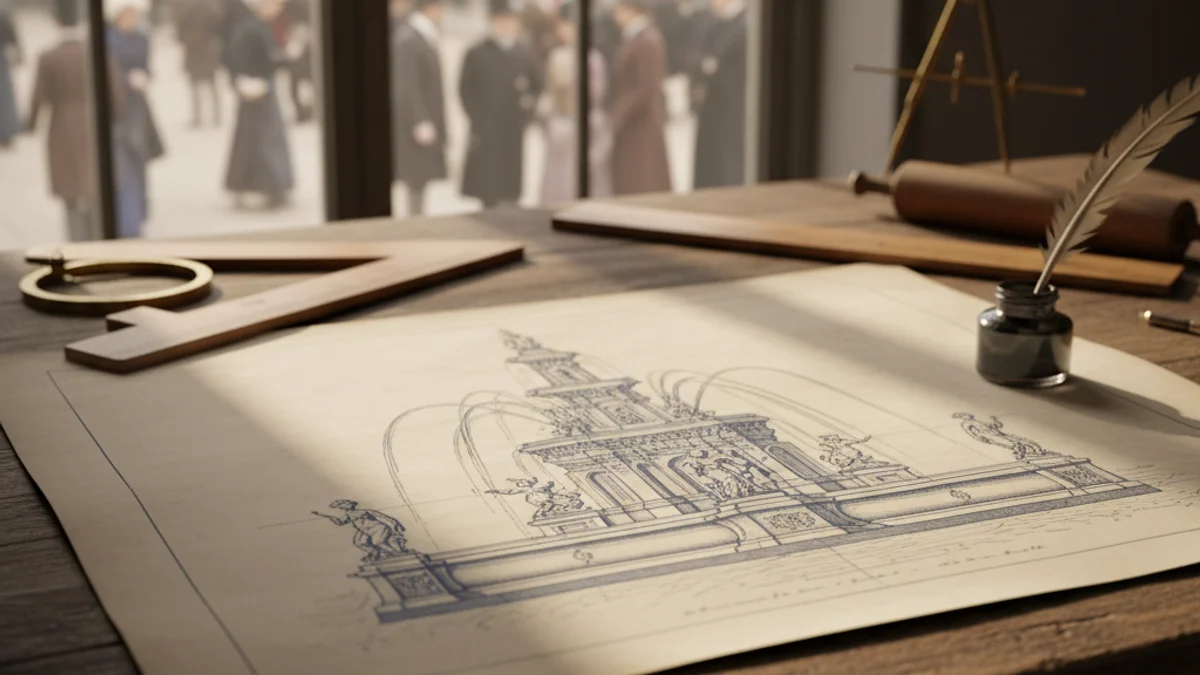
A standout discovery is a monumental fountain for Plaça de Catalunya designed in 1876. Standing 47 meters tall, the project treated water as an architectural element, with Gaudí calculating air friction to create walkable paths beneath water parabolas.
“"I do not know if we have awarded this degree to a madman or a genius. Time will tell."
While his academic record mostly shows average passing grades, his final project for the University of Barcelona (UB) Great Hall earned him top honors. This work prioritized rationalist functions and scenography, demonstrating a geometric control that would later define his world-renowned career.