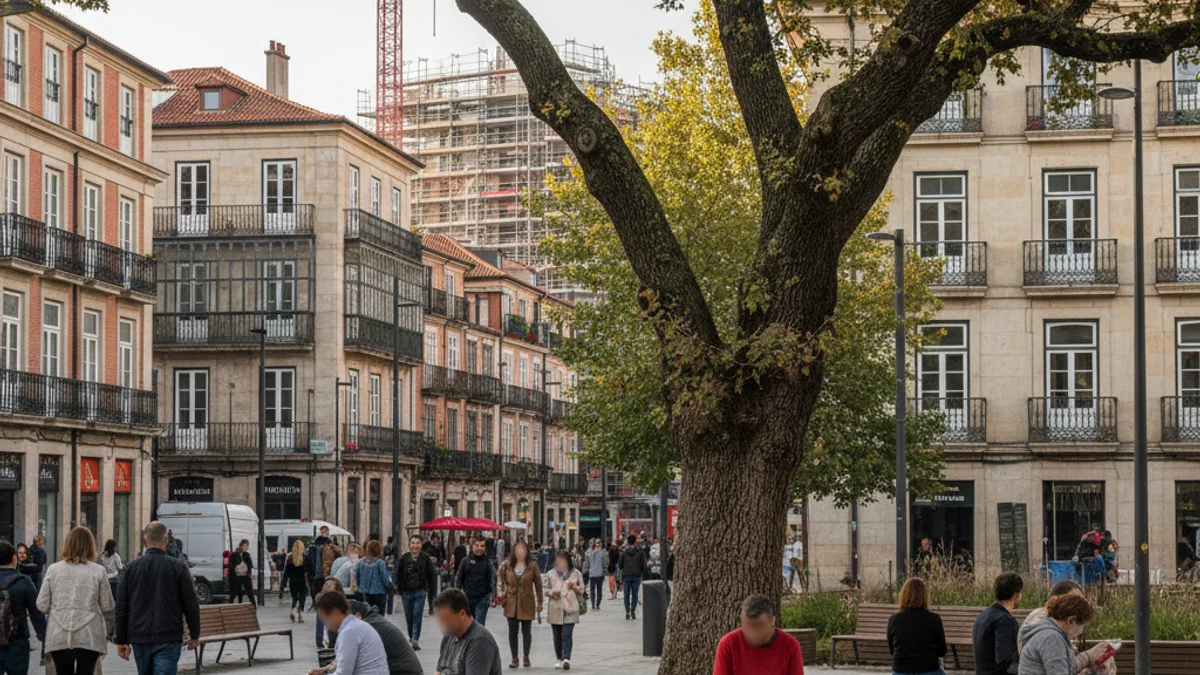
The governing commission of the Barcelona City Council gave the initial green light to the modification of the Comprehensive Special Urban Improvement Plan for the plot of the Casetes d’Encarnació, 13-15-17, where the cataloged tree is located. The new planning foresees that the square to be built will have 100 m² more than initially planned, with dimensions similar to half of the Plaça de la Vila de Gràcia. In exchange, the public housing building will reduce its height, going from 15 to 13 floors.
“"Building a larger square will allow the oak tree, considered of local interest, to be conserved in better conditions. The tree has become a symbol of the neighborhood, which was saved by neighborhood mobilization."
The municipal architectural proposal includes a ground-floor facility and the 13 homes, which will increase the number of public flats in Vila de Gràcia by 26%. This will be the first public housing development carried out in the neighborhood in 14 years. The project plans to demolish the interior of the houses on Carrer de l’Encarnació, while preserving their historic façade.
This decision puts an end to a long conflict that began in 2018, when, under the government of Ada Colau and Eloi Badia, the houses and the oak tree were close to being demolished by a private developer who intended to build 28 flats there. Neighborhood mobilization prevented the demolition. Finally, the City Council had to expropriate the houses, compensating the owner with 8.8 million euros, including VAT.