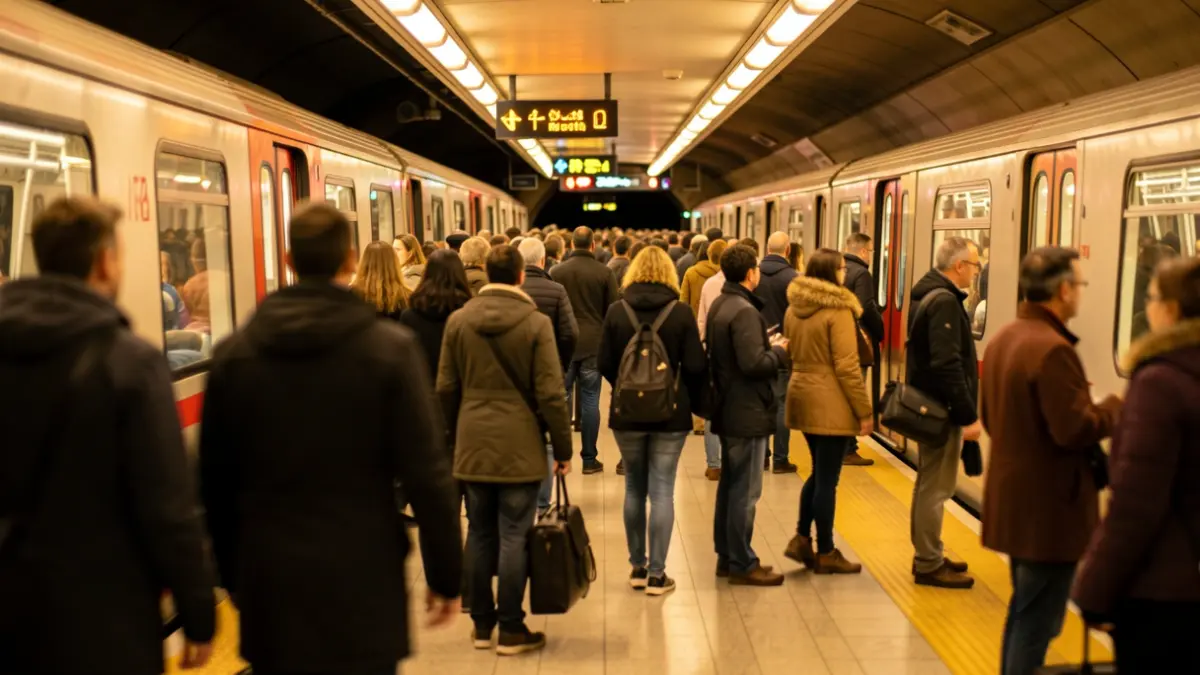
Barcelona's metro stations have seen a notable shift in user flows due to the Rodalies crisis. According to TMB data, major interchange stations such as Sagrera, Catalunya, Sants Estació, and Passeig de Gràcia lost a total of 729,000 passengers in the first quarter of the year. This decline contrasts with the increase recorded at other metro stations connecting to bus lines or Ferrocarrils de la Generalitat (FGC).
The Diagonal station, which connects to FGC Provença, saw its passenger numbers rise by 200,000, reaching 4.5 million, thus surpassing Catalunya, which lost 100,000 users, settling at 4.2 million. The most significant losses were recorded at Sagrera and Sants Estació, with a decrease of 300,000 people, representing 10% and 11% fewer passengers, respectively.
On the other end, the Fabra i Puig station (L1) stood out with a 35% increase in passenger numbers, adding 600,000 users to reach 2.3 million. This station, less equipped for the massive influx of interurban buses that replaced Rodalies trains, required increased staff presence to manage passenger flows.
Similarly, the Badalona-Pompeu Fabra station (L2) experienced a 20% rise in users, with an additional 200,000 validations, reaching 1.3 million. These changes highlight how Rodalies users have opted for the metro to travel to Barcelona, prompting TMB to reinforce lines L1 and L5 with new trains.
Plaça Espanya station maintained its user numbers from the previous year, with 3.9 million passengers, connecting to the FGC Llobregat-Anoia line. Overall, Barcelona's metro registered a 3.2% growth in validations in the first quarter, reaching 125.8 million, an increase considered moderate by TMB.