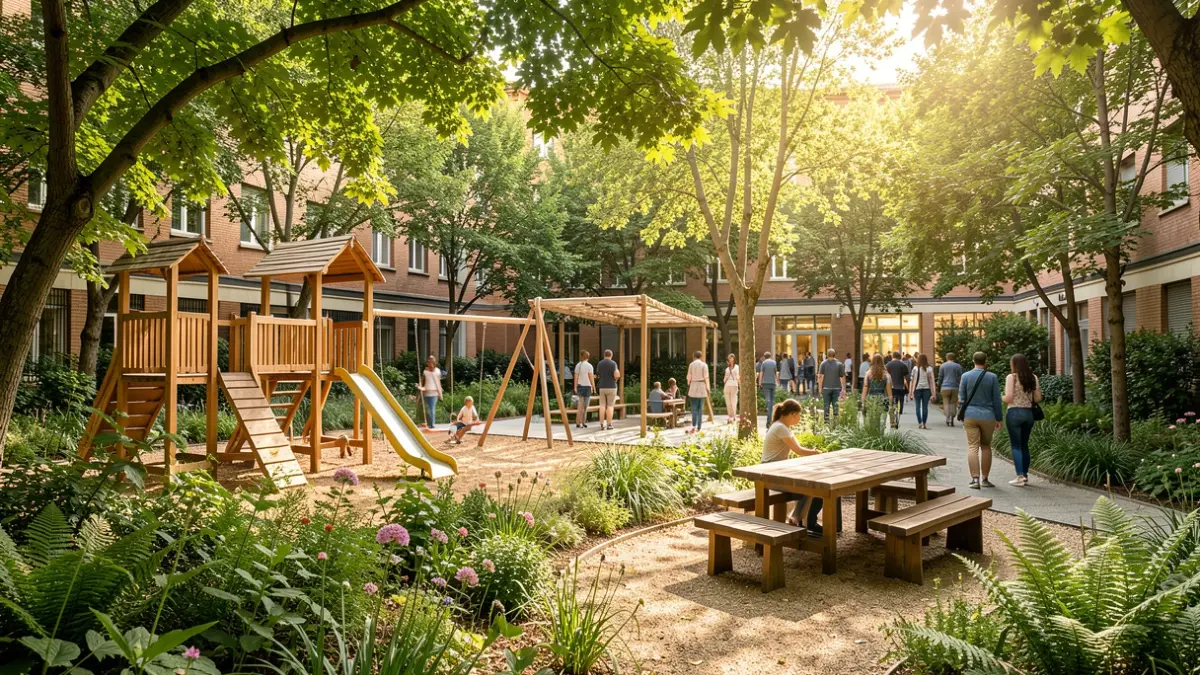
The La Farigola de Vallcarca School, located at Carrer Sant Camil, 31, will expand its playground with the addition of a new 120 m2 naturalized space. This initiative will increase the outdoor area available for students.
The new plot, adjacent to the school's sports court, will be transformed into an area for play, learning, and contact with nature. It will be connected to the court via stairs and will provide direct access to the Bosc Turull environmental classroom, a municipal facility frequently used by the school.
The naturalization of the space will involve incorporating new vegetation, topsoil, seating areas, furniture, and play elements designed to encourage free play, physical activity, and environmental education. The project also includes shaded zones and the use of sustainable materials.
Construction work will take place during the non-academic summer period to minimize disruption to school activities, with completion expected by the end of September. These improvements are promoted by the Consorci d'Educació and the Gràcia district, funded by the social return from Park Güell revenues as part of initiatives in the neighborhoods surrounding the park.
This project aligns with the municipal commitment to enhance school playgrounds, promote their naturalization, and create healthier and more inclusive educational environments.
La Farigola de Vallcarca School, inaugurated in 1923, was a pioneering public school in the city, established for the education of the working classes in the Vallcarca and El Coll neighborhood. It was part of the pedagogical movement advocating for active learning. Its Noucentista building, designed by Josep Goday, is recognized as a cultural asset of local interest.