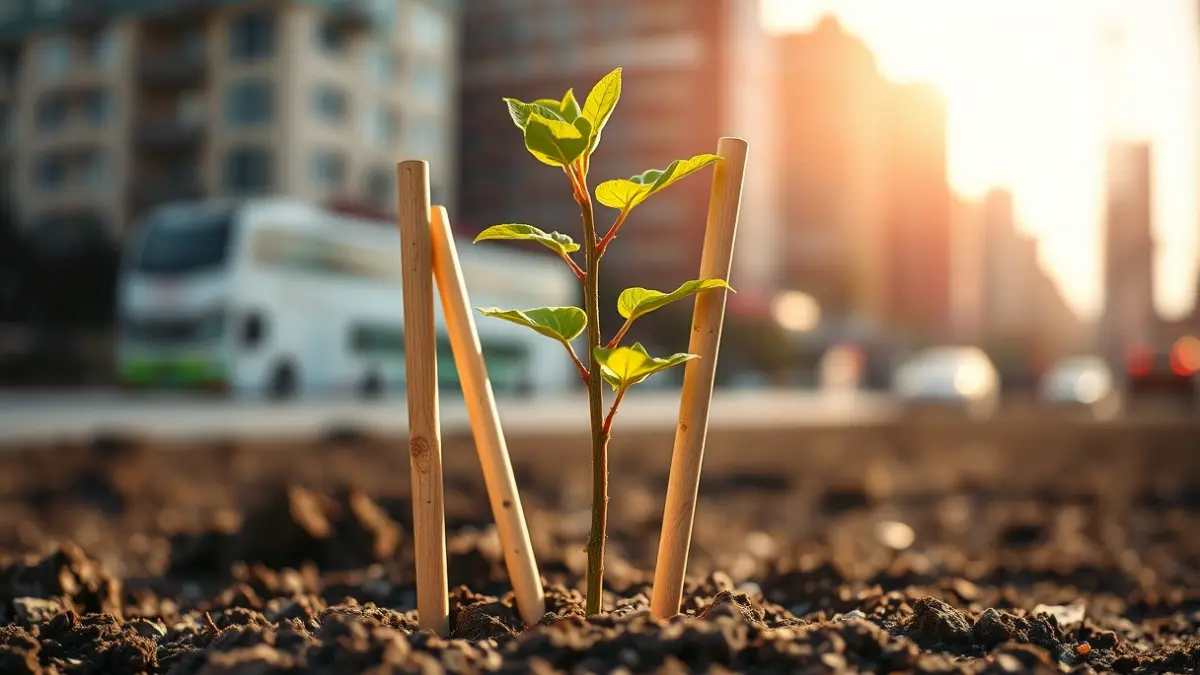
Several municipalities in the province of Barcelona are facing a significant challenge in obtaining enough trees for urban reforestation, a situation exacerbated by the recent drought. The lack of stock has led city councils like Sabadell to make their projects more flexible, accepting specimens with thinner trunks, incorporating alternative species, and even seeking suppliers in France and Italy.
The Santa Coloma de Gramenet council has also admitted a "significant supply problem" for the most common species, a difficulty they anticipate will persist for years due to the drop in production during the drought period. As a palliative measure, they are planting younger, protected specimens and have started reserving trees in nurseries in advance.
The city of Barcelona, which needs about 500 trees to replace those lost to the drought, attributes the situation to the simultaneous increase in demand from many city councils that have launched intensive planting campaigns. These trees are expected to be planted during the upcoming summer and autumn campaigns. For its part, Terrassa has largely obtained the requested trees, although on occasion it has had to visit several nurseries or wait to receive specific species.
“"There is strong demand, we also have been dragging a crisis since 2008 because we are very linked to construction and many nurseries closed. It is a somewhat chastened sector and the mix of everything makes it difficult to find many things."
Tree producers point to a combination of factors contributing to the scarcity, including strong demand, the sector's crisis since 2008 which led to the closure of many nurseries, and increased transport costs. Furthermore, tree production is a long process, which can take between five and ten years, making it difficult to respond quickly to increased demand.
The consulted nursery owners agree that the increase in municipal orders responds more to the need to acquire varieties resistant to an increasingly warm and dry climate, driven by climate change and the creation of climate shelters. This trend has generated growing competition for the same types of trees, even with nurseries from other European countries buying from Spain.