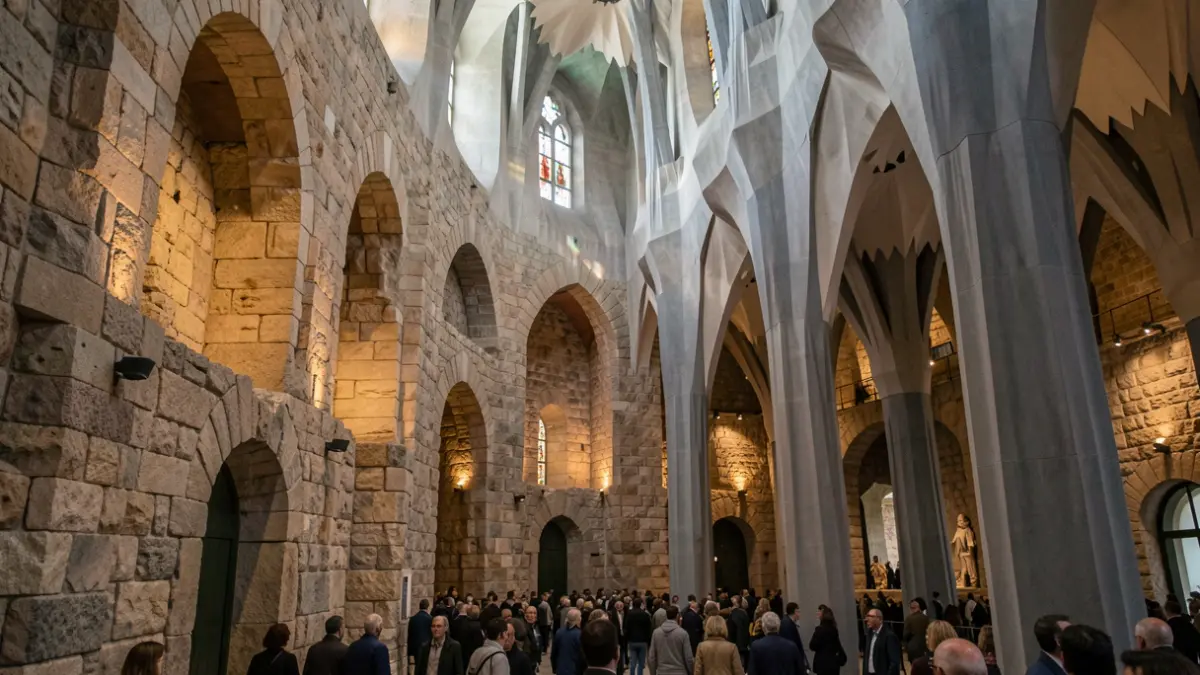
As the city celebrates the blessing of the Jesus tower at the Sagrada Familia, doors open to previously unseen corners of the temple. Beneath the imposing structure, which reaches 172.5 meters, lies a crypt dating back to the temple's initial construction phases, a space markedly different from the unique Gaudí masterpiece rising above. This crypt, preserving the early stages of the temple, also serves as the final resting place for Antoni Gaudí, whose remains remained undisturbed during the events of 1936.
Unlike other historic places of worship, such as the church of Sant Just i Pastor, where a 6th-century baptismal font was discovered, or the Barcelona Cathedral, which houses the remains of 45 notable figures, the Sagrada Familia's crypt occupies only a portion of the subsoil. The original vision of Josep Maria Bocabella, the philanthropist who conceived the expiatory temple, was for major patrons to have reserved tombs within the church, a request that did not materialize in 1917.
Beyond the crypt, the basilica's true basements are more functional in nature. These areas, situated on the clayey soils of Barcelona, function as the temple's engine room. Their role is vital in ensuring optimal climate control, preventing the interior from becoming an 'icebox' in winter or an 'inferno' in summer, thereby guaranteeing visitor comfort.
“"The crypt is a space very unlike Gaudí's style, or at least very different from the unparalleled building that rises on the surface."