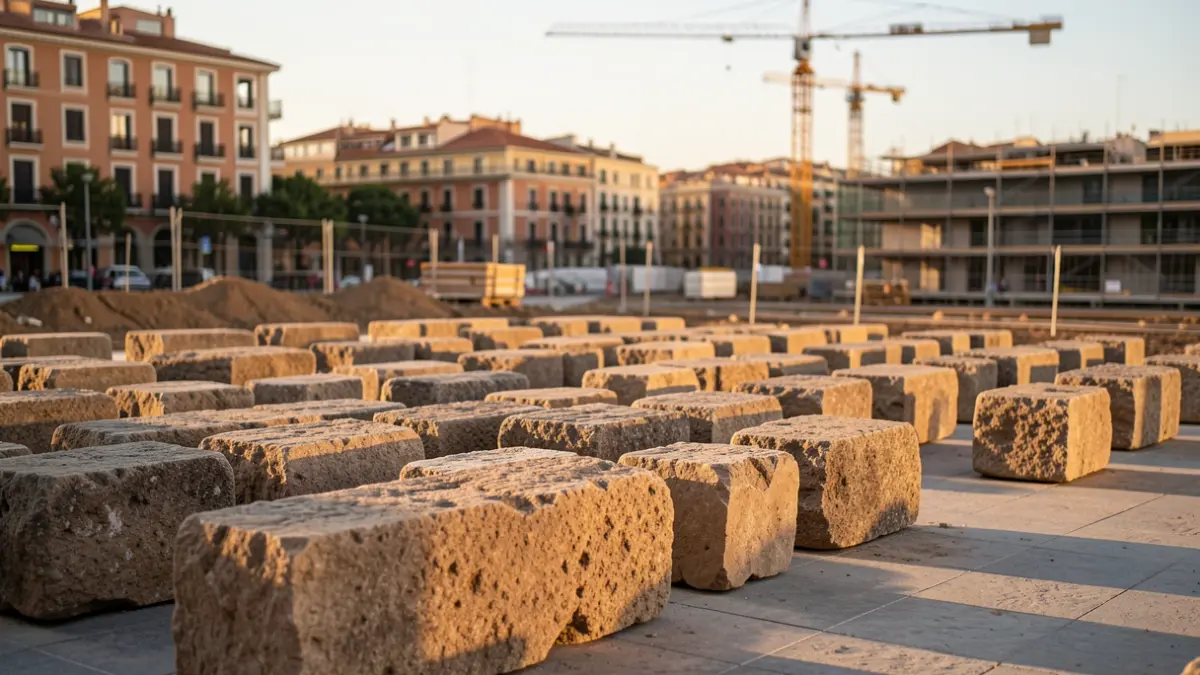
An empty plot, designated for the expansion of Glòries square, now houses an exceptional collection of 250 stone blocks. These pieces originate from the former Montjuïc quarries, which for centuries were the primary source of building material for the city of Barcelona.
The stones, stored in orderly rows, come from the old military housing on Wellington street, acquired by the Pompeu Fabra University for its expansion. These stones, which could tell stories from past centuries, formed the base of these properties from the late 19th century until recent times.
Montjuïc was the quarry for Roman Barcino and provided material for iconic buildings such as Santa Maria del Mar, the Palau de la Generalitat, and the Barcelona City Hall. The quality of its quartz, feldspar, and silica, formed millions of years ago, ensured exceptional resistance and durability, even being used in modernist works like Palau Güell or Casa Batlló.
The history of these blocks is linked to the Ciutadella. After the demolition of the military fortress in 1868, the Ministry of War demanded the construction of new military barracks and housing. The stones now recovered were part of those constructions and may have witnessed historical events such as the military uprising of 1936 or the city's bombings.
Pompeu Fabra University, by donating these blocks to the city council, has allowed this heritage treasure to have a new life. Although no longer used for building walls, these professionally carved stones could be used for new pavements or public spaces, possibly returning to Montjuïc, closing a historical cycle of over 150 years.