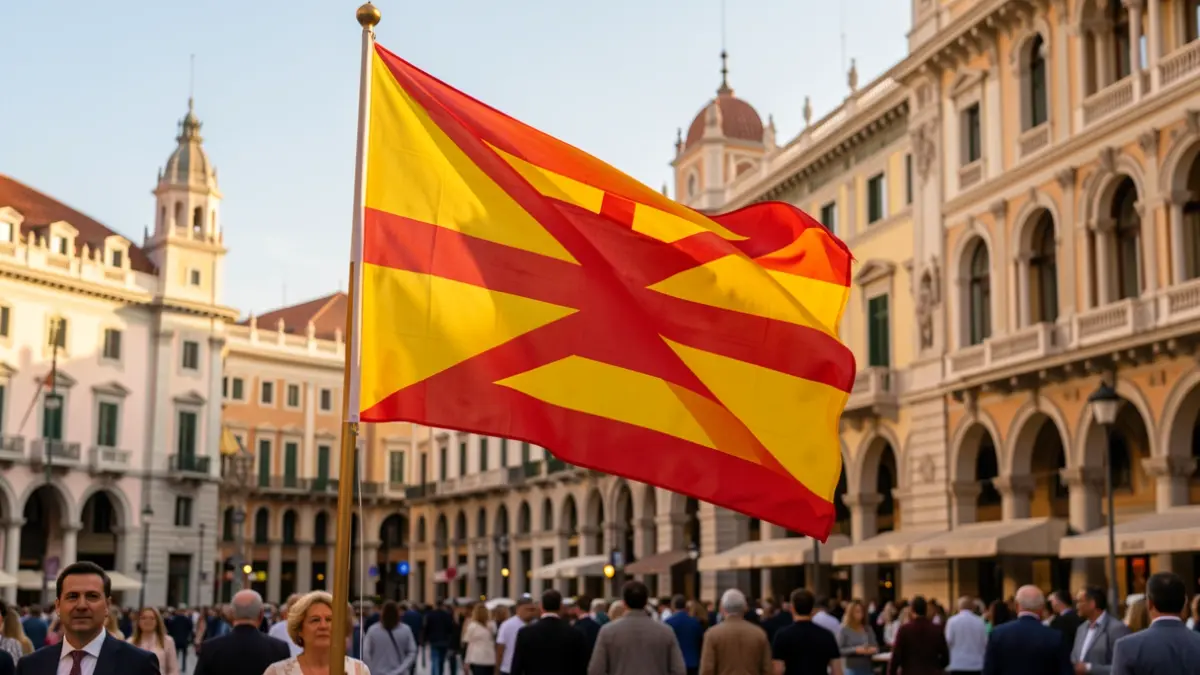
Since July 2025, a linguistic perspective has been integrated into the municipal actions of Barcelona, led by the Commissioner for the Social Use of Catalan, Marta Salicrú. The objective has been to strengthen the language as a vehicle for participation and community, achieving agreements with various entities and administrations to increase resources.
Progress has been concentrated in areas such as youth, leisure, associativism, education, and sociolinguistic integration, aiming to guarantee spaces for interaction and combat hate speech. The Commissioner presented a report to the City Council's Commission for Social Rights, Culture, and Sports, detailing projects in leisure, education, associativism, and commerce, as well as agreements to strengthen the language.
In the training sector, a funding agreement has been signed with the Consorci per a la Normalització Lingüística (CPNL), increasing the municipal contribution by 1.15 million euros, exceeding 3 million annually. This investment will create 5,000 new places for Catalan courses for the 2026-2027 academic year, aiming to eliminate waiting lists.
The General Call for Subsidies 2026 has allocated aid to 66 specific projects for Catalan promotion, consolidating the language as a transversal axis. This initiative is set to be strengthened in 2027 with an increased budget.
The Casa de la Creació Digital de Barcelona has been promoted, a new public facility to boost digital content in Catalan. Following the start of public activities in February 2026, the foundation was established in July, with four professionals joining. The project had a budget of 750,000 euros in 2026.
In promoting Catalan in leisure and education, notable initiatives include the 'Joves i Català' project with the Institut d’Estudis Catalans (IEC), the creation of a working group with 22 municipal nursery schools, and interventions in five schools and institutes through a project led by the aFFaC. The Accelerated Welcome Classrooms (AAA) have also been expanded with a summer course.
Linguistic dynamization extends to play spaces like Patis Oberts and Juguem a les places, and civic centers, libraries, and sports facilities are being supported to become informal Catalan learning resources.
In the associativism sector, in collaboration with Torre Jussana, the guide “Català en l’associacionisme” will be published in September. Training and awareness activities for youth workers are also planned.
The City Council is participating in the MigrAccions congress (November 19-21 at the Ateneu Barcelonès), focusing on social cohesion and the participation of migrants through Catalan language and culture.
Regarding commerce, information on linguistic regulations has been incorporated into resources for businesses, and a pilot project will be carried out in the Gràcia district in autumn 2026. Transformation efforts on La Rambla also include a linguistic perspective, and work is underway to integrate regulatory compliance into municipal licensing and inspection circuits.
In public spaces, linguistic criteria have been incorporated into the revision of the Urban Landscape Usage Ordinance. The implementation of the Catalan Language Use Regulation (RULC) is being promoted in municipal areas such as the Guàrdia Urbana, TMB, BIMSA, and Barcelona Activa. Work is in progress to create a channel for complaints and inquiries regarding linguistic rights.
Support has been provided to events such as the Nit de les Lletres Catalanes and the Correllengua Agermanat. Before the end of the year, the Municipal Council of the Catalan Language will be presented, and language tables and councils in districts like Nou Barris and Sants-Montjuïc are being supported.
The 2026 Municipal Services Survey will include specific questions on linguistic usage for the first time, aiming to obtain a more precise diagnosis and redesign policies accordingly.