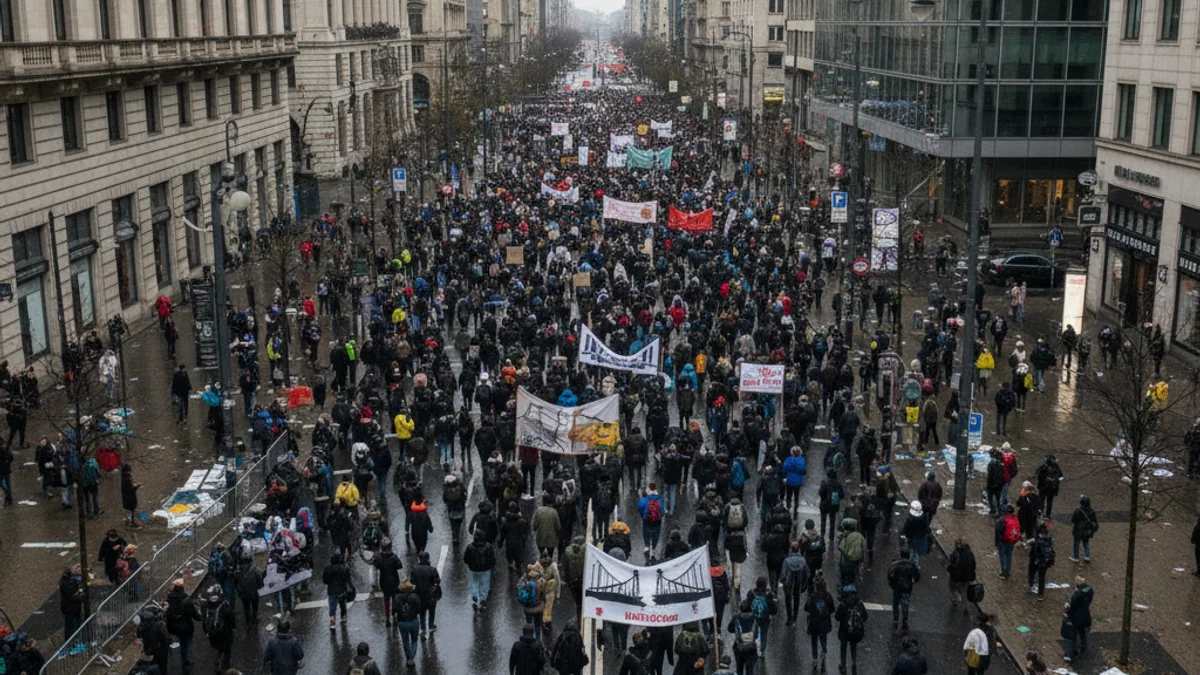
The unitary march, which gathered between 3,000 (according to the Guàrdia Urbana) and 40,000 people (according to the organizers), started at 5 p.m. at the Estació de França and proceeded along Via Laietana to the Plaça de Sant Jaume. This mobilization was the second of the day, following an earlier pro-independence march called by the Assemblea Nacional Catalana (ANC) and the Consell de la República.
The crisis accelerated following the incident on January 20 on the R4 line near Gelida, where a collapsing wall caused the death of a trainee driver. This led to the total suspension of the service the next day, January 21, and since then, daily incidents have severely tested user patience.
“"The Rodalies network was already vulnerable before this crisis, which is the result of poor investment for decades and a centralist model. Life must be made easy for the user."
“"The burden of this misfortune has fallen upon the users, who have been pushed to the limit and have no more patience. We are late in life, this has hit rock bottom."
Union representatives also voiced their concerns. Belen López, Secretary General of Comisiones Obreras (CCOO), denounced a "classist policy" that prioritizes high-speed rail, while mobility becomes the "poor little sister" of public policies. Criticism was also directed at the outsourcing of activities belonging to Adif and Renfe, which has led to service precariousness.
The day of protest occurs just before a new week of complications, as train drivers have called a strike for Monday, Tuesday, and Wednesday, following the failure of negotiations with the Ministry of Transport. Railway unions are demanding increased safety and a general improvement of the service.