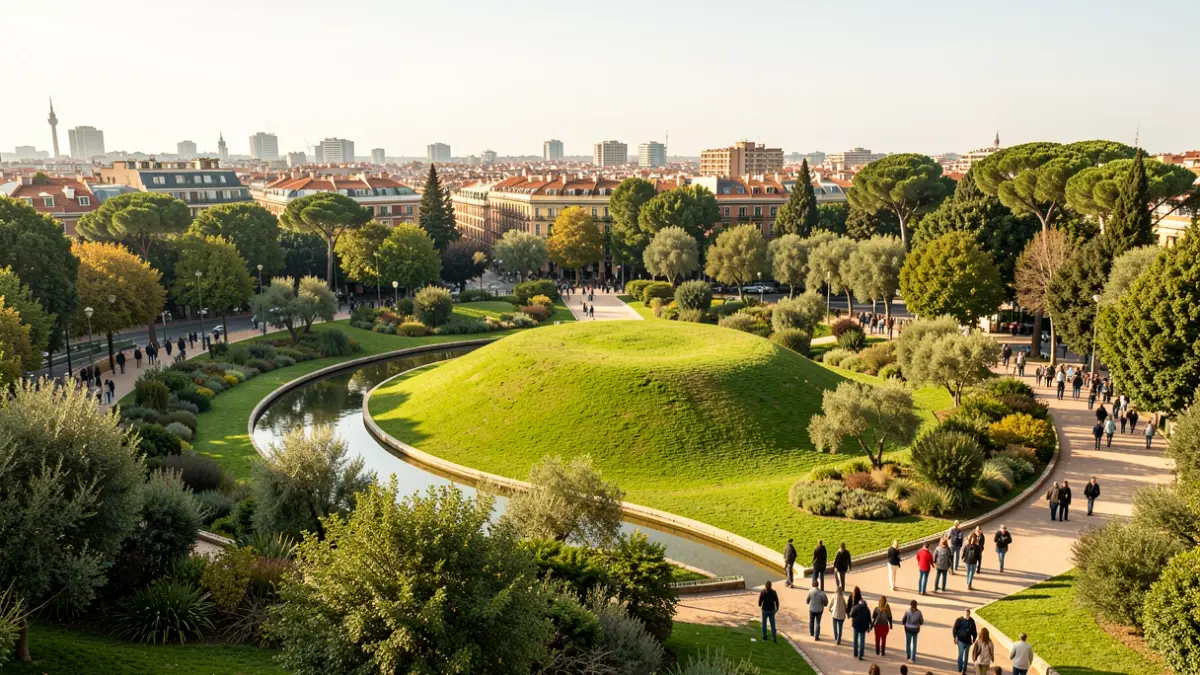
Parc de la Trinitat, one of the most extensive green spaces in the Sant Andreu district, is situated on Passeig de Santa Coloma in the Trinitat Vella neighborhood. This civic area combines leisure facilities, sports installations, picnic spots, and urban gardens. Its proximity to the Trinitat Vella metro station facilitates access and makes it a regular meeting point.
The park has a semicircular shape organized around a large grassy hill and a channel that runs through much of the grounds, one of its most distinctive features. Various paths connect the different zones, allowing for a mix of thoroughfares and areas for rest and citizen activities, creating a unique environment within the surrounding urban landscape.
A significant portion of the park is covered by meadows and tree lines, including poplars, olive trees, plane trees, and acacias, which enhance its plant diversity. This vegetation forms a distinctive landscape that integrates natural elements with public-use areas.
Parc de la Trinitat offers facilities for physical activity, including sports courts and areas for model car racing. It also features a large picnic zone equipped with public barbecues.
Particularly noteworthy is the municipal urban garden, spanning approximately 2,400 square meters, with 61 plots cultivated by retired local residents, fostering community activity and citizen involvement in green space management.
The park also incorporates several works of art. Among them are Cavalls desbocats, a sculpture by Josep Ros from 1993, and Dona que es banya, by Rafael Bartolozzi, located near the water channel.