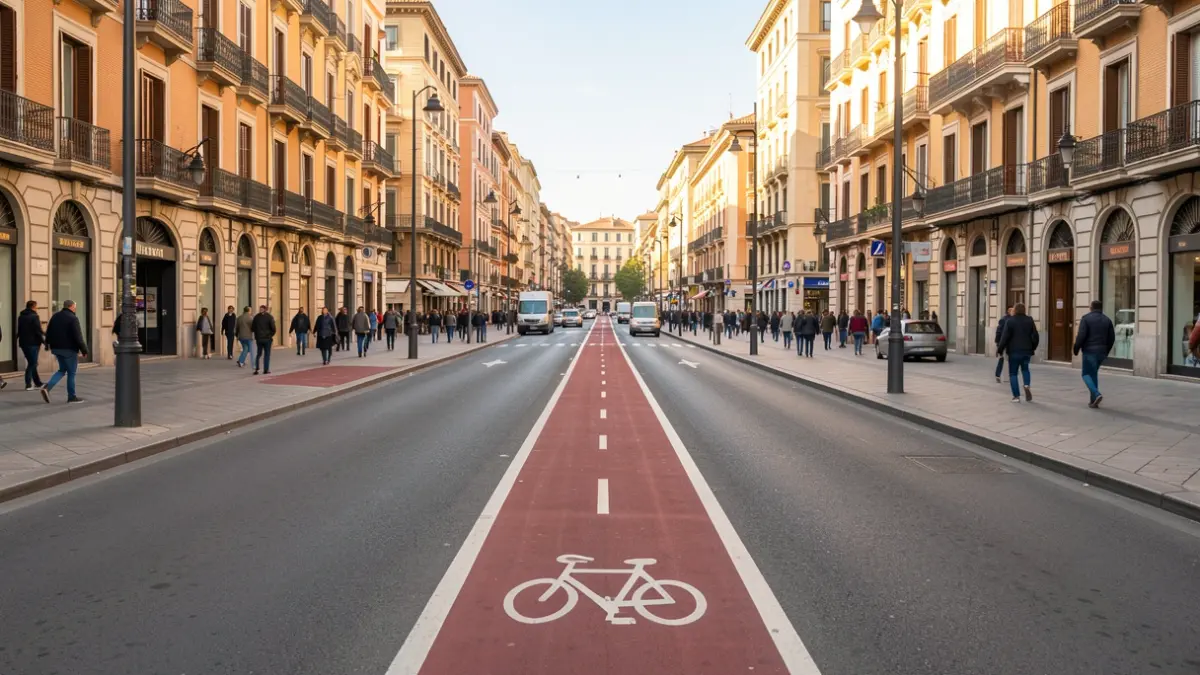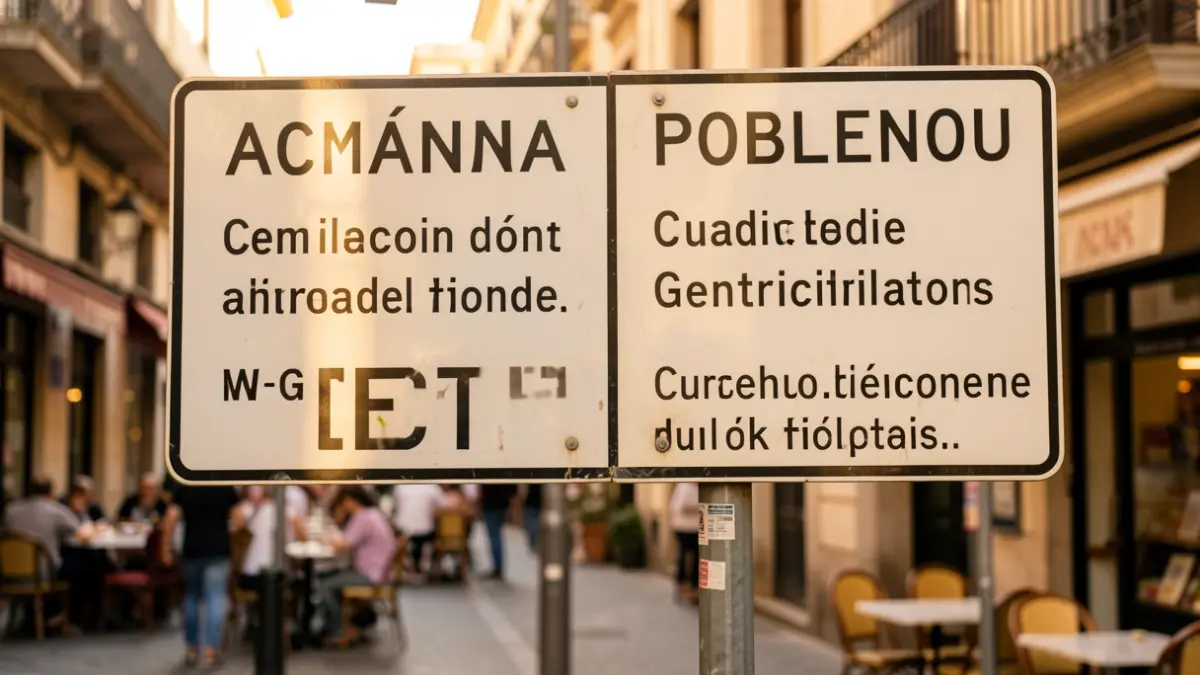
The Rambla del Poblenou, heading towards the sea, displays a changed landscape. A partially erased graffiti, originally reading "Expats go home", illustrates the increasing presence of foreign residents. In recent years, businesses with exclusively English signage have proliferated, raising concerns among residents about the difficulty of maintaining Catalan as their primary language.
Xavier Vidal, a bookseller at No Llegiu, laments that "you only hear English now" and emphasizes that "the neighborhood has changed a lot in just two years." This phenomenon is part of the gentrification process, which, according to a report by Plataforma per la Llengua, has negatively impacted the vitality of Catalan, particularly in the commercial sector.
The report analyzes demographic and economic data. Between 2015 and 2025, the population born in countries with a higher GDP per capita than Catalonia has grown significantly in Poblenou. Specifically, the population from Australia and New Zealand has increased by 165%, from North America by 144%, from Northern Europe by 89%, and from Western Europe by 38%. Currently, 6.58% of the neighborhood's residents come from countries with a higher GDP per capita, nearly double the average for Sant Martí (3.36%) and well above the city's average (3.77%).
Xavier Dengra, coordinator of Business and Consumption at Plataforma per la Llengua, explains that "there is a commercial adaptation to the new demand from a monolingual English-speaking population. Signage and oral communication are migrating towards this language." On the Rambla, examples such as the transformation of the Coral hardware store into a supermarket advertised in English, or cafes and shops with exclusively English signs, highlight this trend.
The report indicates that between 2022 and 2026, businesses with signage in languages other than Catalan and Spanish have increased from 2% to 26%. In 2012, there were none. Regarding oral interaction, 79% of shopkeepers greet customers initially in Spanish, and only 21% in Catalan. If a customer responds in Catalan, 52% of shopkeepers switch back to Spanish, a figure that has increased from 31% in 2012.
Regarding the use of Catalan on the street, data from the City Council's Municipal Services Survey indicates that in 2025, only 31.8% of residents in Sant Martí had Catalan as their habitual language, below the city's average (34.8%). 10.2% of residents habitually used a language other than Catalan or Spanish.
The report also reveals that, although the foreign population represents 26.5% of residents in Poblenou, 35.8% of apartments purchased in 2025 were acquired by individuals without Spanish nationality, a figure significantly higher than the city's average (23%). Furthermore, rental prices have increased by 70.5% since 2014, exceeding the rise in the district and the city as a whole.
The situation is reflected in the real estate market: on May 6th, out of 57 rental apartments in the neighborhood, only 11 were for long-term stays, while 46 were for seasonal rentals. No apartment was offered for less than 1,200 euros per month. These figures align with the banners seen during the week of housing rights mobilizations in the area.
As one approaches the beach, Catalan becomes even more diluted. Areas like the corner of Taulat and Sant Francesc, formerly home to the restaurant Racó del Taulat, now host a cafe with English signs such as "Take it slow, enjoy your day," reflecting a sterile and predominantly English-speaking environment.
Plataforma per la Llengua proposes measures such as increased monitoring of linguistic regulations and the mandatory creation of linguistic integration plans for companies and coworkings, including Catalan courses during working hours. It also calls for the establishment of periodic indicators of social Catalan usage to define linguistic substitution thresholds and implement preventive or corrective measures.