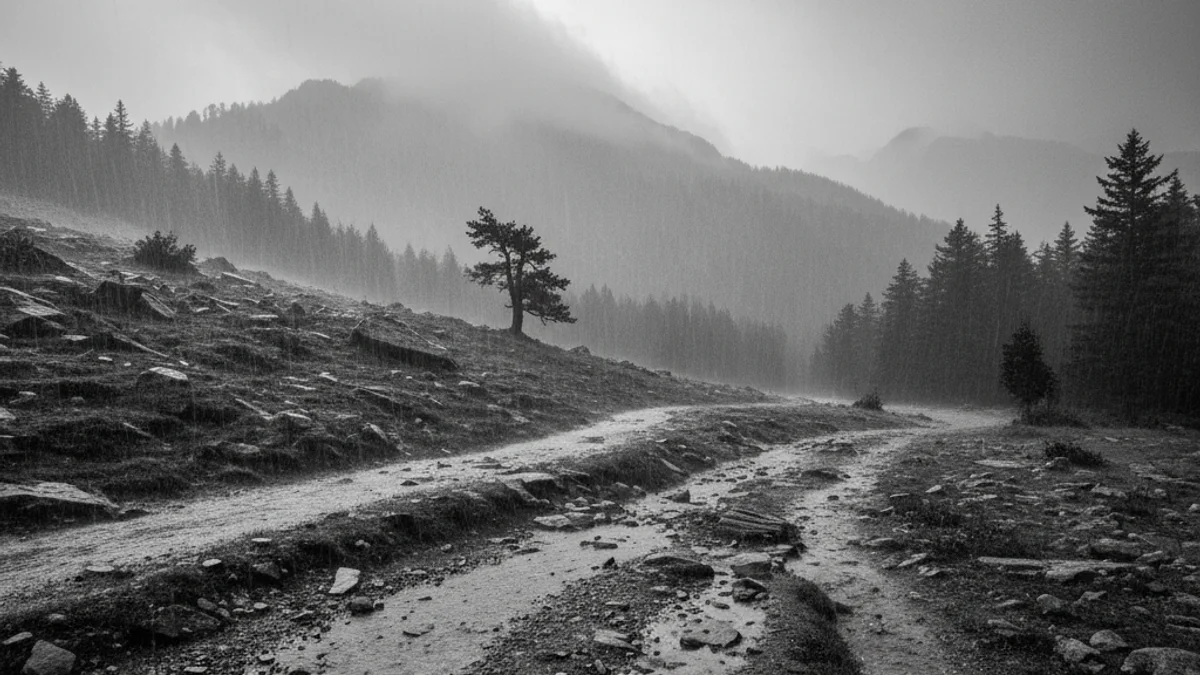
Data collected by the Observatori Fabra indicates that 100 l/m² were registered in Barcelona in January alone, a sixth of the annual average. This pattern has led the Servei Meteorològic de Catalunya (Meteocat) to classify the 2025-2026 winter as the wettest since the 1995-1996 period, and even since 1950 in some areas.
“"For now, the maps indicate two more weeks of precipitation."
This phenomenon is attributed to the 'polar jet' effect, according to Corral. This intense air current acts as a “conveyor belt of depressions” due to the presence of powerful anticyclones located further north than usual. These anticyclones “block, because they are persistent and do not move,” forcing the polar jet to descend in latitude and direct storms directly towards the Iberian Peninsula.
The consequences of this instability have been positive for water reserves: the reservoirs in Catalonia's internal basins have climbed to 90.5% of their capacity, ensuring water for more than a year without restrictions, according to the Agència Catalana de l’Aigua (Aca). Furthermore, snowfall has been exceptional in the mountains, with the automatic station in Núria breaking its 26-year historical record by measuring 144 centimeters of accumulated snow on January 26.