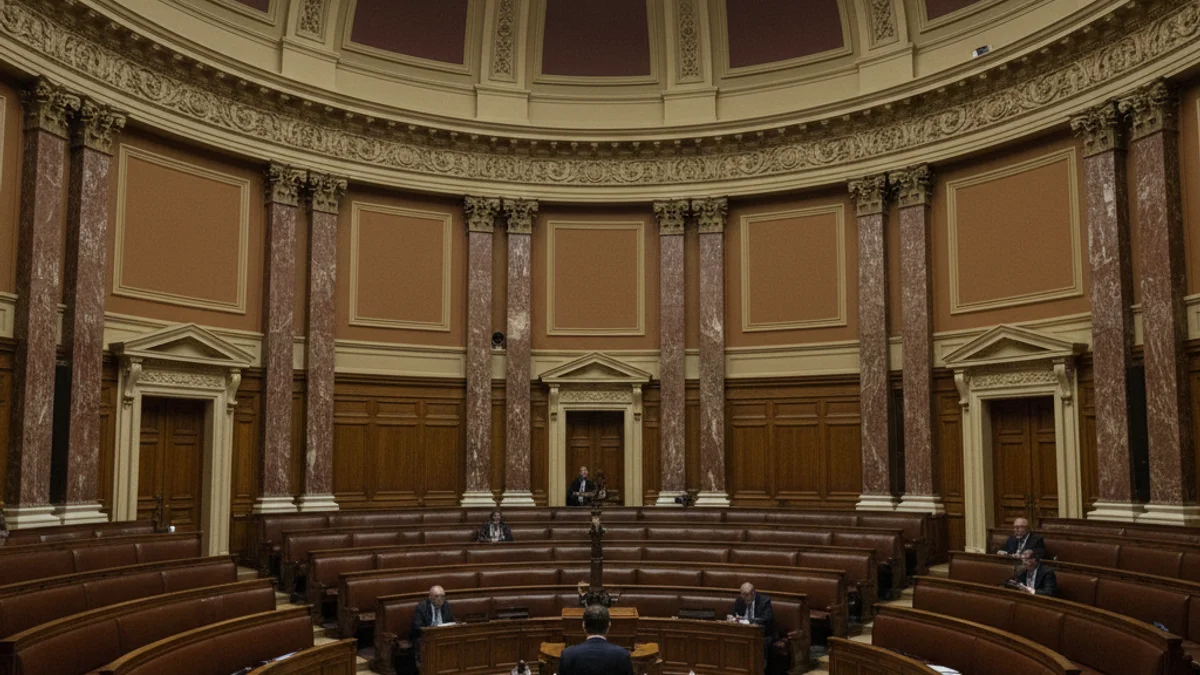
During his appearance, the Minister offered his "most sincere apologies" to Rodalies users affected by the disruption, which coincided with new failures on the Catalan network and the Barcelona-Madrid high-speed line. Despite calls for his resignation from the right-wing and independence parties, Puente maintained that he would not step down.
“"The railway network is not like a teapot. It won't be fixed in two days."
In response to the crisis, José Antonio Santano, Secretary of State for Transport and Puente's second-in-command, announced that he is moving to Barcelona indefinitely to personally oversee the service recovery in the Principality. Puente highlighted that an operation involving over 300 people has been deployed to resolve the multiple incidents.
Puente acknowledged the "chronic abandonment" of the Catalan network, blaming previous PP governments, and stated that the current government is reversing this trend with an additional investment of 2.240 million euros in Rodalies over the coming years. He emphasized that passenger safety is the priority, asserting that the Spanish railway system is "very safe."
Regarding the tragic train accident in Adamuz (Córdoba), which resulted in 46 fatalities, Puente indicated that the investigation is ongoing. Samples of the affected rail will be sent to a metallurgical laboratory to determine the possible causes of the infrastructure rupture, with no hypothesis being ruled out.