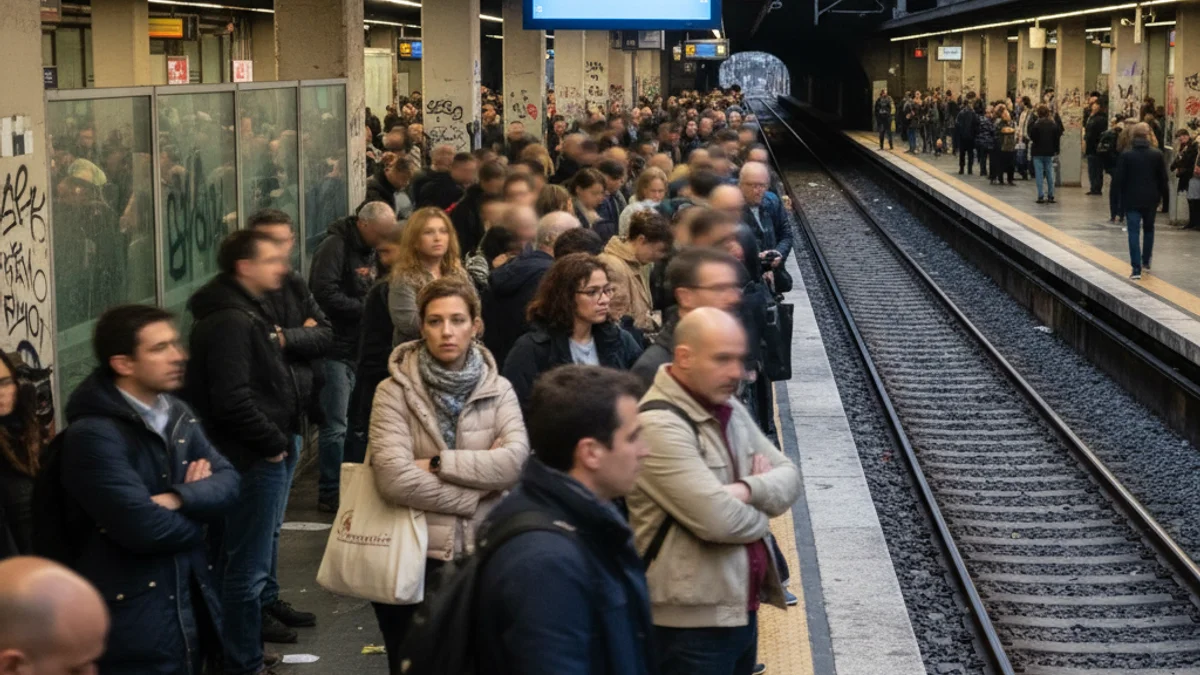
The storm was the trigger for the latest crisis, which began on the afternoon of Tuesday, January 20, at the Plaça de Catalunya station in Barcelona. Users experienced delays and the sudden disappearance of trains on the R1 line (connecting to the Maresme area). Subsequently, the train driver had to correct official information, announcing that the train would not stop at Premià de Mar due to a fallen canopy.
The incidents worsened with a derailment caused by a rock fall between Tordera and Maçanet de la Selva (in the province of Girona), and the collapse of a wall at the Pineda de Mar station the following day. These events led to the total suspension of the service, leaving 400,000 daily commuters without clear alternatives, with scenes of resignation in towns like Malgrat de Mar.
“"The situation evidences the lack of maintenance that existed for a long time and has left the network very vulnerable."
This crisis has reopened the debate on historical “disinvestments.” According to the Independent Authority for Fiscal Responsibility (Airef), between 1990 and 2018, Rodalies only received 617 million euros, far from the commitments announced by governments such as those of José Luis Rodríguez Zapatero and Mariano Rajoy. In the same period, the central administration allocated 55.884 million euros to the high-speed rail network (AVE), 15 times more than to the commuter rail network.
The Illa Government is confident that current investment plans, which foresee 6.300 million euros between 2020 and 2030, will begin to bear fruit. Furthermore, the new mixed company Rodalies de Catalunya, owned by Renfe and the Generalitat, has as its first task to straighten out the R1 line, one of the oldest and most saturated, and to protect the infrastructure against extreme weather phenomena, such as the Gloria storm in 2020.