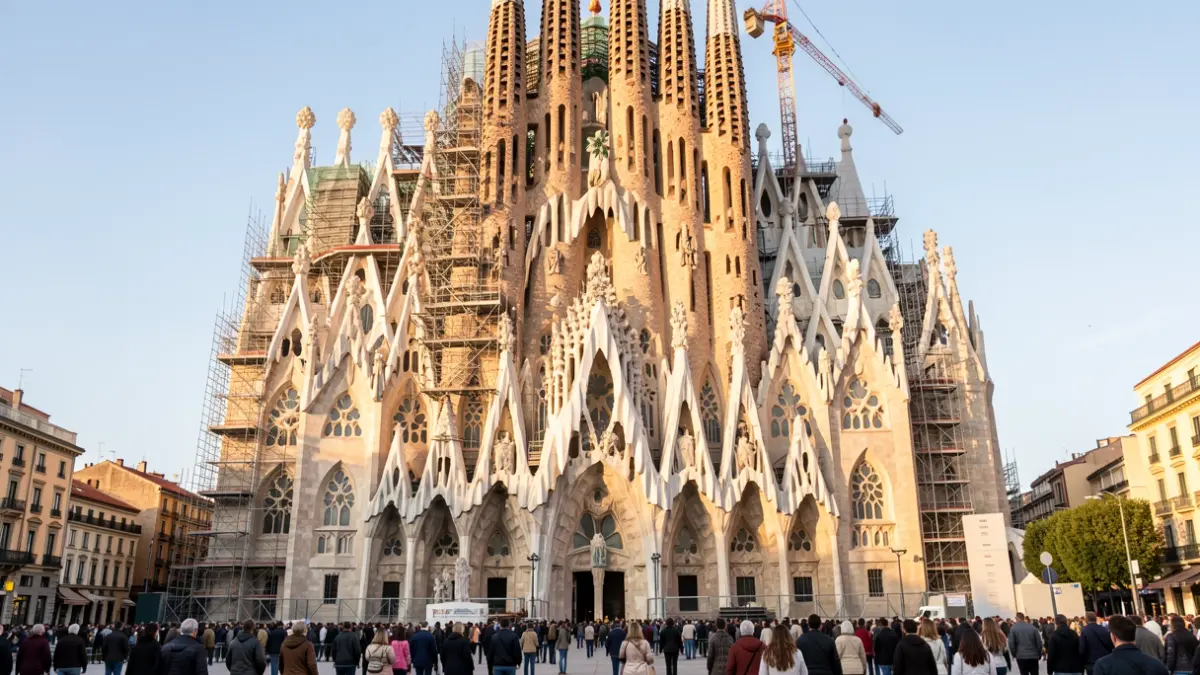
The urban planning conflict surrounding the Sagrada Familia, which includes the construction of a grand staircase for the Glory facade, could impact a maximum of 216 homes, according to a census compiled by the neighborhood's Residents Association. This figure represents one-fifth of the initial estimates, which suggested up to a thousand affected properties.
The revised estimates are based on the Construction Board's determination to proceed with the staircase, despite earlier reports suggesting Gaudí's original design did not include it. The prevailing idea now is that demolitions will be confined primarily to one city block, avoiding impact on a second block near València street.
“"Affected residents who own their apartments (or their family members if applicable) must be provided with housing solutions in the neighborhood at no cost."
The Residents Association proposes that affected tenants receive treatment similar to that in other city areas, such as Glòries, either allowing them to stay until their contracts expire or offering them urban development affected status. The Sagrada Familia purchased a nearby plot in 2019, presumably for new housing construction.
The Barcelona City Council committed to defining the situation for affected residents by 2027. The President of the Construction Board, Esteve Camps, has indicated that an agreement with the Council is "very close," while Mayor Jaume Collboni has emphasized the need to guarantee the right to housing and fair treatment for residents, even as the staircase construction is deemed necessary for the city.
The current urban plan from 1976 envisioned a wider avenue that would have required demolishing buildings on both sides of Paula Font passage. However, a narrower option is being considered to minimize the number of affected individuals. The negotiation also encompasses commercial spaces, offices, parking lots, and tourist apartments, in addition to residential units.