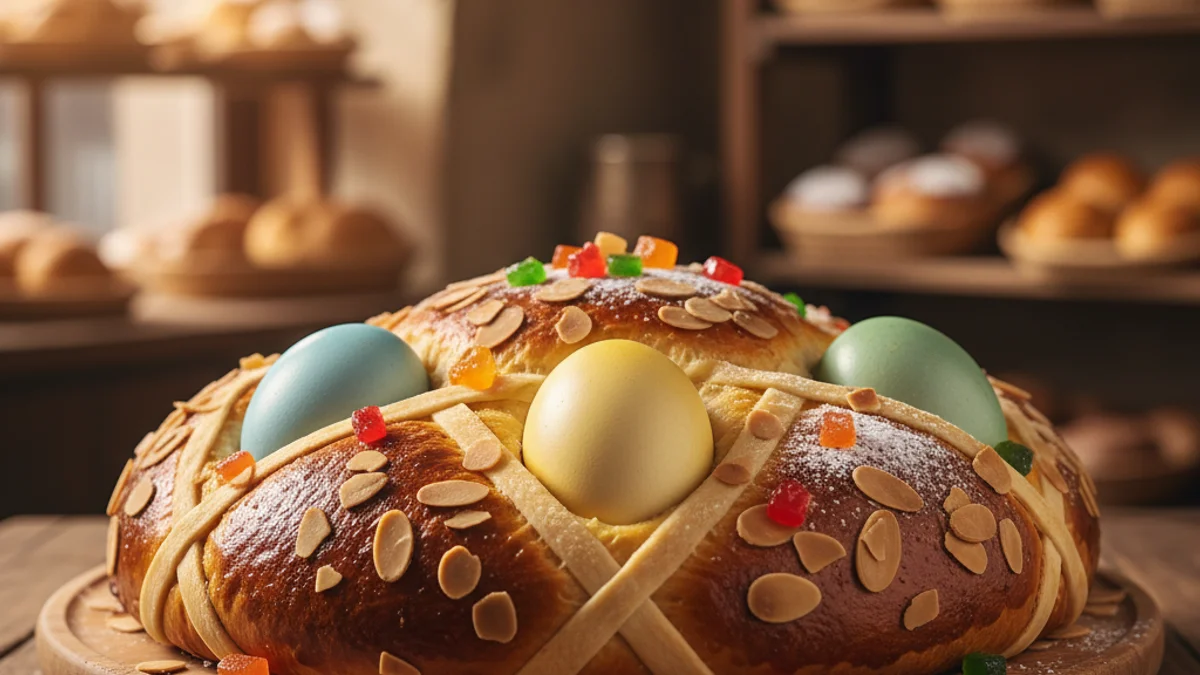
First documented in the 14th century, the name likely comes from the Arabic word munna, meaning 'gift'. Traditionally, godparents give the cake to their godchildren. In its earliest form, it was a simple brioche with hard-boiled eggs, representing the return of restricted foods after the period of Lent.
The modern version we see today in Barcelona took shape in the 1930s, when local pastry chefs began replacing eggs with chocolate figures. Today, it remains a powerful symbol of family unity and the arrival of spring across Catalan-speaking territories.