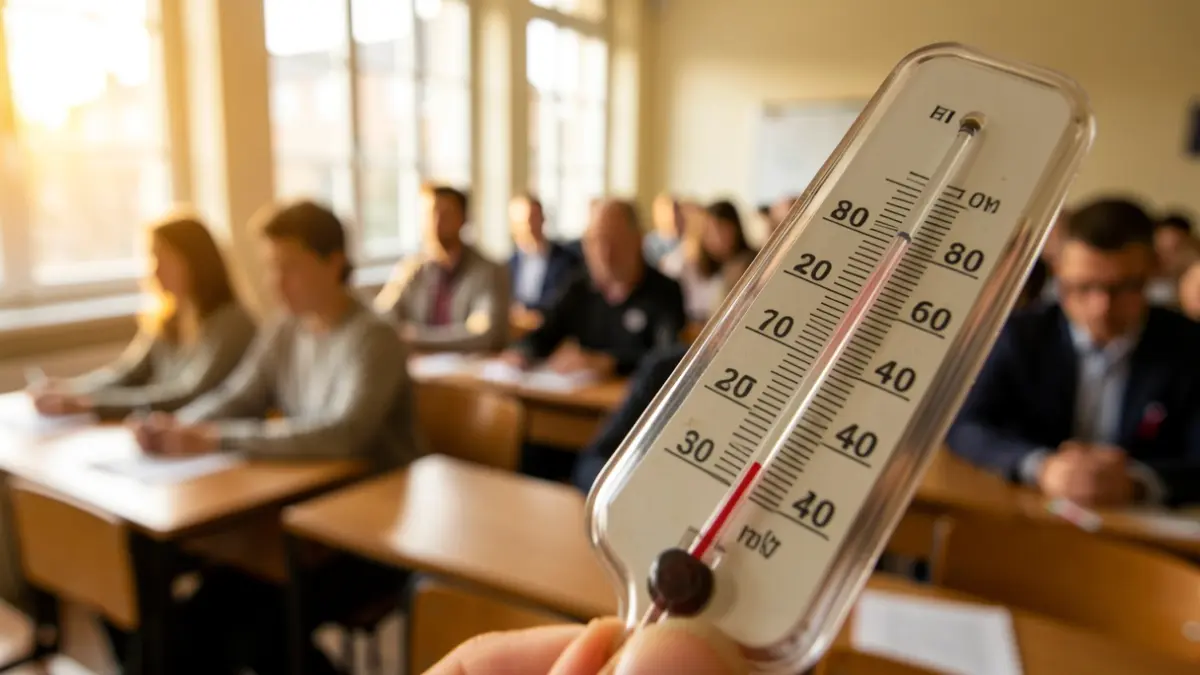
Records obtained using thermal cameras at an educational center in Barcelona have revealed values exceeding 31 ºC inside classrooms and the dining hall. These figures far exceed the optimal temperature for learning, which is between 22 ºC and 24 ºC, and even surpass the 27 ºC limit established for sedentary work in labor legislation.
The study also focused on school playgrounds. While areas with shade and vegetation maintain more moderate temperatures, spaces exposed to the sun, such as sports courts, have recorded values above 50 ºC. This situation has prompted the organization to demand urgent climate adaptation measures.
Among the proposals put forward by the organization, the need to implement sustainable bioclimatic systems, such as cross-ventilation and thermal insulation, stands out, as well as the naturalization of playgrounds through tree planting and the creation of shaded areas. Furthermore, it advocates for the creation of safe school routes and prioritizing reforms in neighborhoods with more extreme temperatures.