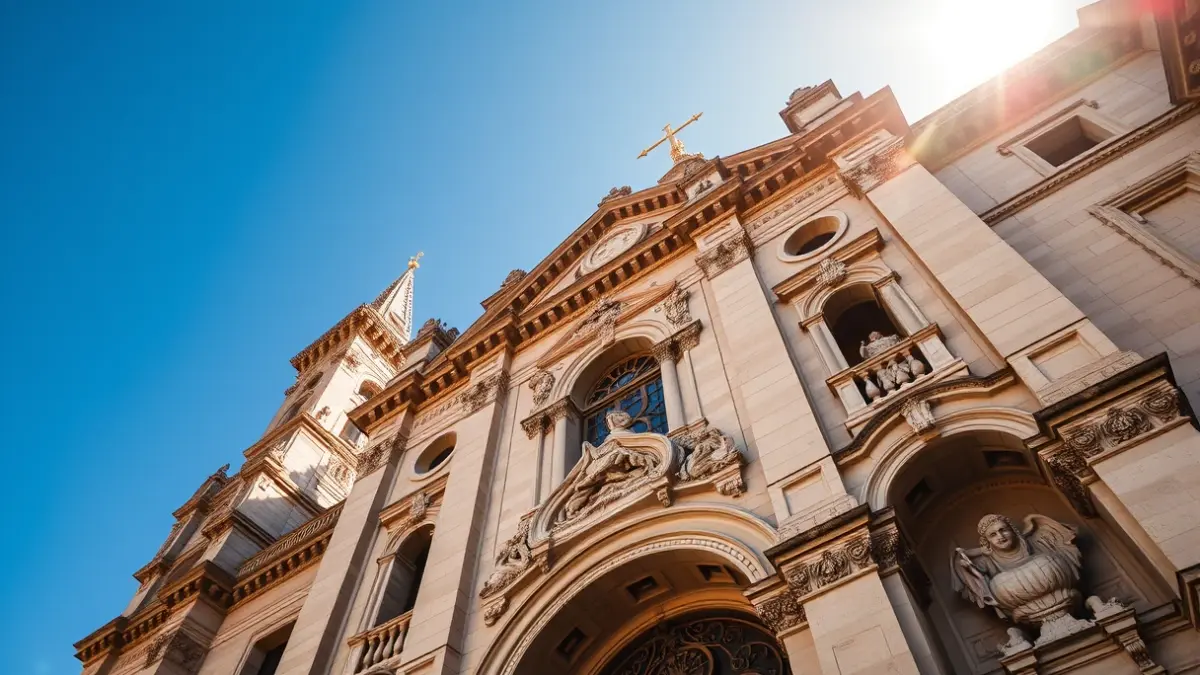
This façade, characterized by its severity and theological density, was conceived by the architect to express the «mystery of redemption» with radical formal power. A scholar of Gaudí's work, who completed her doctoral thesis on the subject, has reconstructed the genesis of this project and its relationship with the subsequent sculptural intervention by Josep Maria Subirachs.
The first sketches for the façade date back to between 1892 and 1900, coinciding with the temple's expansion. However, the definitive design was finalized in 1911, a crucial year for Gaudí. Afflicted by fevers and secluded in Puigcerdà for health reasons, the architect delved into the spiritual texts that had always nourished his artistic vision.
“"I designed the current Passion façade in pain."
During this period, Gaudí dedicated himself to reviewing the Gospels, the Roman Missal, and other fundamental works, in an «exhaustive return to the sources that inspired his way of seeing the world». The 1911 drawing, preserved and analyzed by architect Isidre Puig Boada, reveals a structure full of symbolism, with a portico of six inclined columns and five arches, where the three doors represent theological virtues and the central cross acts as a narrative axis.
Gaudí's architectural proposal is articulated around the Paschal Triduum, seeking to represent the mystery of redemption. Unlike the exuberant Nativity Façade, the Passion Façade is characterized by its austerity, with «very simple geometric edges» that aim to provoke a physical and spiritual reaction in the observer, focusing attention on the tragedy. The architect desired a façade that was «geometric, hard, stripped, made of bones», uniting the cross and the empty tomb to symbolize the identification between the Crucified and the Resurrected.
The architectural structure began construction in 1954, faithfully following the original 1911 project. Gaudí had already anticipated that his work would be continued by future generations. Sculptor Josep Maria Subirachs undertook the sculptural intervention in 1987, adapting the narrative and arranging the figures in an ascending chronological order, with an angular and contemporary language that dialogues with the severity envisioned by Gaudí. The result is a modern interpretation of the theological drama, a stone stage that concentrates the symbolic weight of Jesus' last three days.