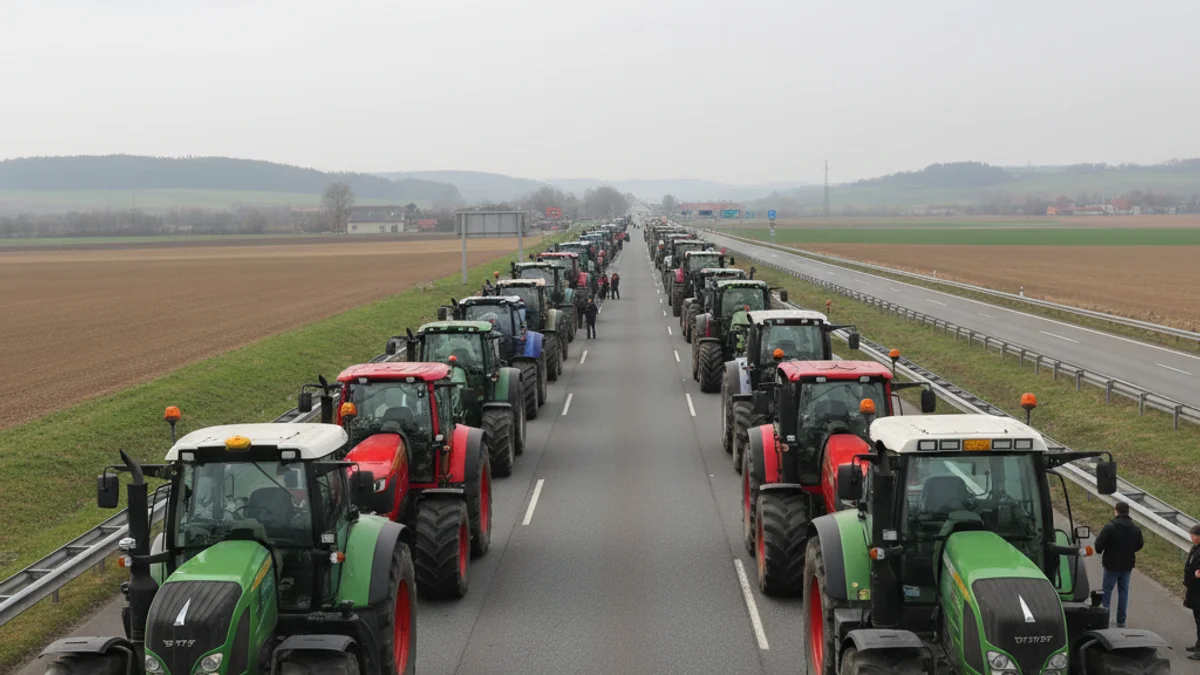
The Revolta Pagesa emerged two years ago as a cry of alarm against excessive bureaucracy, low prices, and drought restrictions that were suffocating the agricultural sector. Despite numerous protests and slow marches, the movement's leaders report a negative balance regarding structural changes.
“"We continue doing the same paperwork, even more; therefore, we continue to have the problem of bureaucracy."
The most notable mobilization occurred on February 7, 2024, when 2,000 tractors paralyzed central Barcelona. This action, along with the blockade of the AP-7 highway in Pontós, achieved significant visibility. Initially, the movement was disorganized, which complicated dialogue with institutions, leading to the later creation of the Gremi de la Pagesia Catalana (Catalan Farming Guild).
“"It was incredible how Revolta Pagesa helped with the whole issue of lumpy skin disease."
Ahead of the agrarian elections scheduled for February 27, 2026, Revolta Pagesa spokespersons have announced they will not run. Instead, they will call for a “protest vote” or spoiled ballot to force change from outside the system, maintaining their goal of shaking up traditional unions.