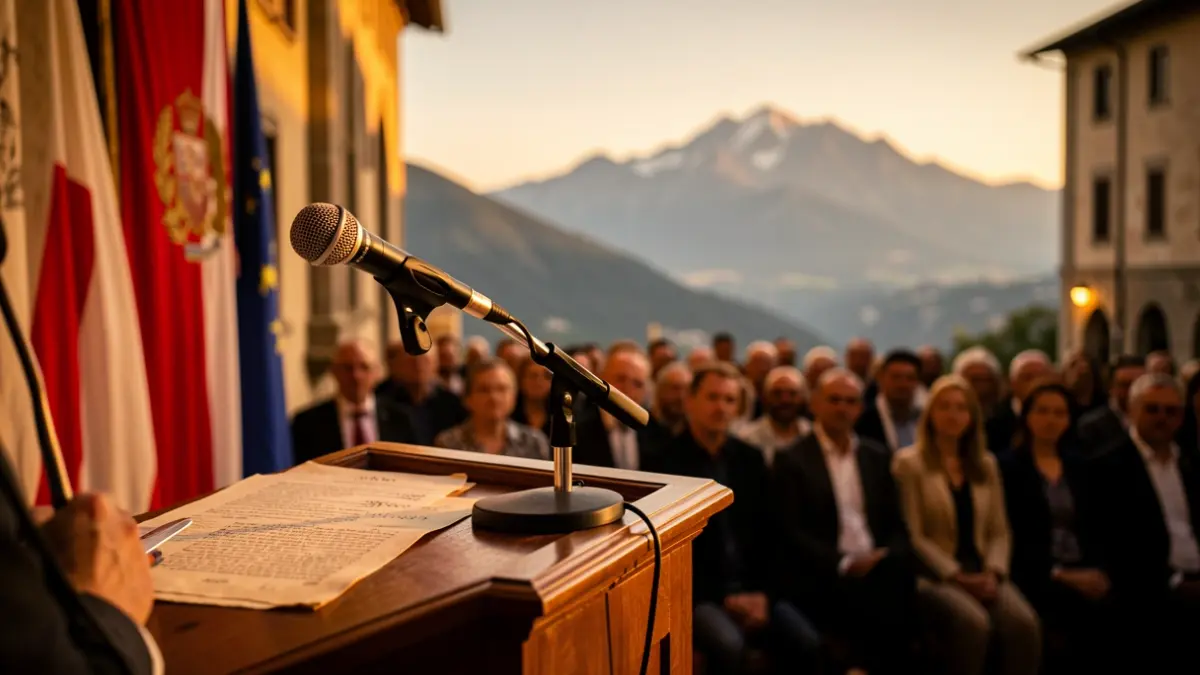
The phrase "Whoever can speak, let them speak; whoever can act, let them act; whoever can contribute, let them contribute; whoever can move, let them move...", popularized by José María Aznar, has become a recurring slogan in political debate, applicable to both those who defend their convictions and those seeking to advance towards national independence. This idea resonates in a context of political negotiations and identity claims.
The article reviews the history of Catalonia's territorial and cultural claims, from the creation of "Spanish provinces" by Javier de Burgos and the loss of Northern Catalonia, to pressures aimed at eroding Catalan identity and language. It criticizes the 1978 Constitution for prohibiting political associations between the Catalan Countries and the surveillance by PP and PSOE to maintain Spanish "national unity."
In the current political landscape, the complexity of alliances is described, with the PSOE and PP seeking support, including from parties like Vox, Junts, or Esquerra Republicana. It also mentions the request by Òmnium Cultural, Lliga Espiritual, Assemblea Nacional Catalana, and the Consell de la República to Pope Leo XIV to use Catalan during his visit, as well as statements by the Archbishop of Tarragona reminding of the importance of the native language.
An episode from the life of architect Gaudí is recalled, who in 1924 was arrested for speaking Catalan during a police interrogation, highlighting historical linguistic repression. Reference is also made to the patron saint of Catalonia, Montserrat, and the need for Catalan to be officially recognized, as requested to the ECJ and the Spanish Constitutional Court.
The article criticizes the PP's stance on the official status of Catalan, Basque, and Galician, and the invitation by its leader, Alberto Núñez Feijóo, to the PNB and Junts. This situation is compared to the PSOE's strategy, and a call for unity is made to defend Catalan interests, recalling the words of Prat de la Riba, Pompeu Fabra, Joan Fuster, and other key figures.
Finally, it reflects on the concept of "cafè per a tothom" (a one-size-fits-all approach) and how it has harmed Catalonia, contrasting it with the Basque Country's economic agreement. The importance of preserving the Catalan language is emphasized, citing Jordi Pujol's quote: "A language is not lost because those who don't know it don't speak it, but because those who do know it stop speaking it."