The Gaudí Chair, founded in 1956 by the architect and disciple Josep Francesc Ràfols i Fontanals, is an institution within the ETSAB (UPC) dedicated to studying the work of Antoni Gaudí and his contemporaries. Since its creation, six directors have led the institution, with Joan Bassegoda Nonell holding the position for the longest period (1968-2008).
Since 2023, the direction has been held by the architect and musician Galdric Santana, an expert in the sound project that Gaudí devised for the Sagrada Família. Santana, who is also commissioner of the Gaudí Year 2026, has expressed the desire to turn the chair into a "living archive" through new acquisitions.
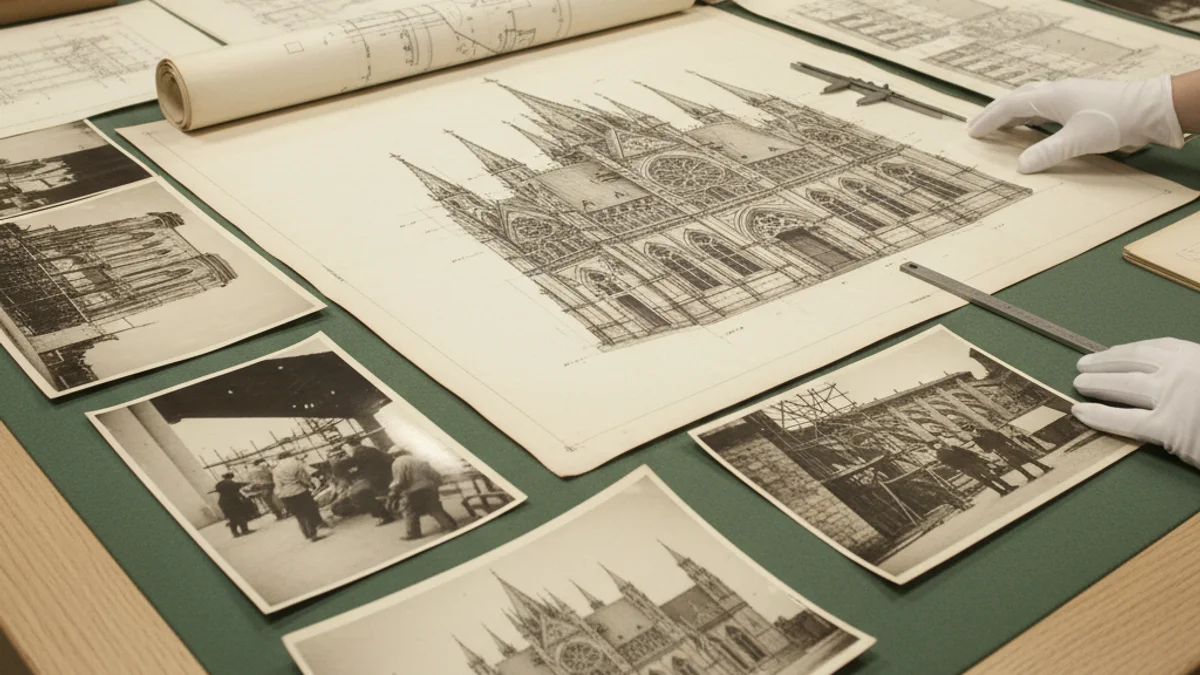
Recently, the institution acquired three groups of historical photographic collections, including a stereoscopic negative of the Sagrada Família under construction dating back to 1906. They also received a donation of an original model of one of the temple's side windows, made by a plasterer under Gaudí's orders.
“"Parts of the collection are cataloged and parts are still pending cataloging. And obviously, it is a day-to-day activity of the archive, which is to update this cataloging of the pieces."
In addition to advancing digitization and preservation, the main objective of the Gaudí Chair is to continue increasing its documentary collection, which already preserves the valuable Àlbums del Temple, magazines published during the first third of the 20th century that were crucial for maintaining fidelity to the original project. For more information on the magnum opus, the betevé program Objectiu Sagrada Família can be recovered.