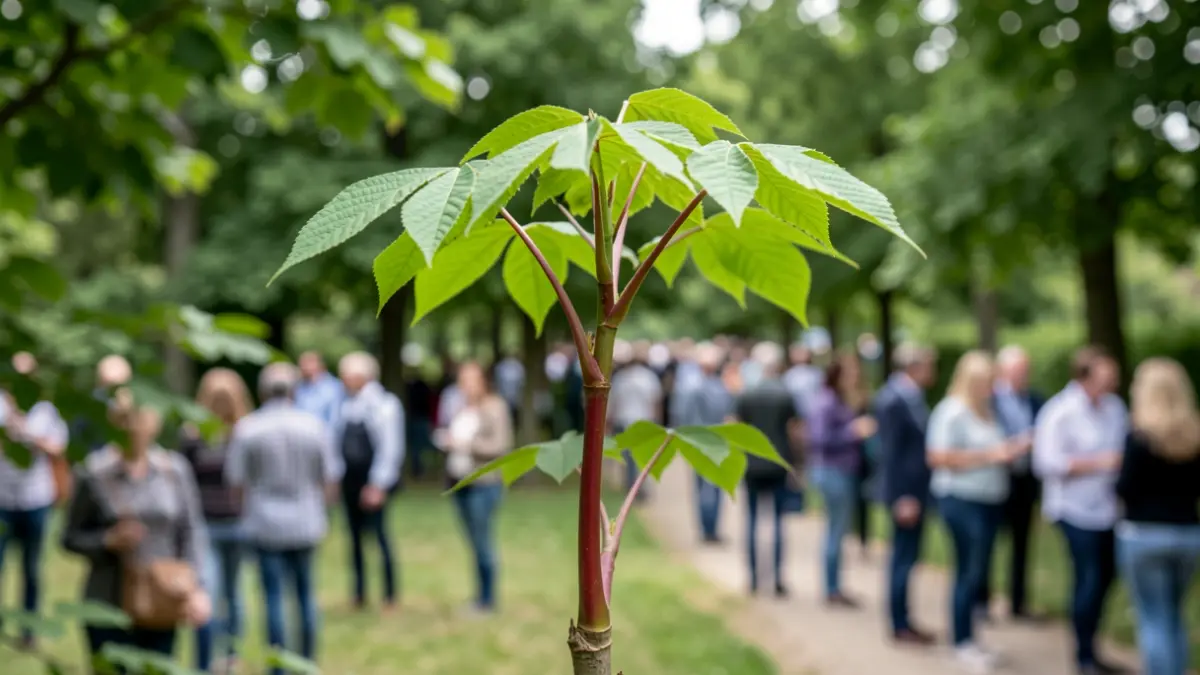
The Ailanthus eradication campaign in Collserola Natural Park has begun the phytosanitary treatment phase for previously identified plants, unaffected by current restrictions in natural areas due to the African swine fever (ASF) outbreak. Actions are concentrated in urban zones, outside the park's restricted areas.
In the 2025 campaign, 1,078 Ailanthus trees were treated, 394 of which were on private plots. The decision to continue the campaign was based on urban areas not being within the Natural Park and the importance of raising awareness about the issue and locating Ailanthus on private land.
Work began in late July with information gathering in the central sector of the park to plan the treatment, carried out by a specialized company contracted by the Consorci. In early September, the first treatments started in the central area's neighborhoods, and information gathering and tree treatment will continue until November.
This project, ongoing since 2014, highlights the collaboration between neighborhood associations, environmental groups, educational institutions, and municipal officials. Citizen participation, especially from neighborhood associations that raise awareness and seek residents' cooperation in treating their plots, is key to the project's efficiency.
The project is organized annually into several phases: review of the previous campaign, awareness activities, talks, door-to-door information gathering, mapping of foci (July-October), treatment of detected Ailanthus (September-November), and felling by the property owner, sometimes with municipal aid.