Seven IMPaCT Cohort Nodes Operational in Catalonia
The epidemiological research project expands its presence across various comarques to study population health long-term.
By Pere Roca Soler
••3 min read
AI
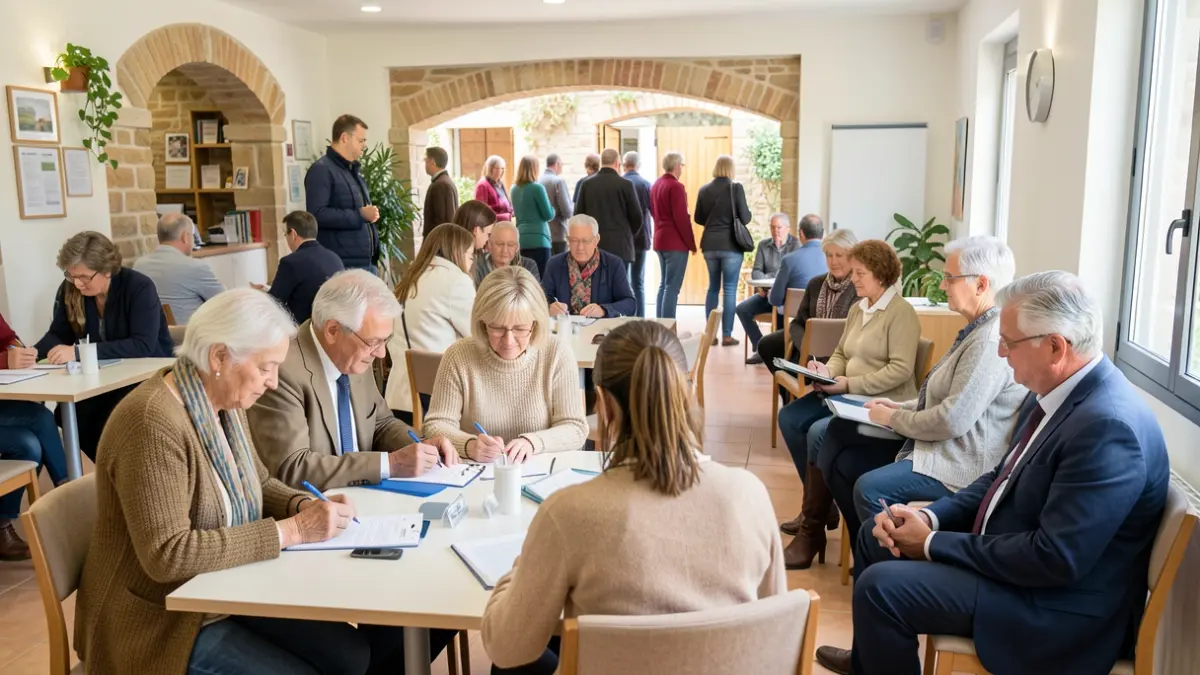
Participants in a health study in Catalonia.
Catalonia now has seven operational nodes for the IMPaCT Cohort, an ambitious epidemiological research project aiming to understand the determinants of population health over the long term.
Catalonia currently has 7 nodes of the IMPaCT Cohort, a major epidemiological research project driven by the Carlos III Health Institute (ISCIII) and managed by the Biomedical Research Network Center (CIBER). This initiative, set to span over 20 years, aims to study the health of 200,000 individuals representative of the Spanish population.
The Catalan nodes, located in reference primary care centers (CAP), cover various comarques. In the province of Barcelona, there are nodes in Manresa (CAP Bages), in Vallès Oriental (CAP Martorelles-Sant Fost), and in Barcelonès Sud (CAP la Florida, L'Hospitalet de Llobregat). In Lleida, research focuses on Segrià (CAP Eixample), and in Girona, at CAP Maluquer Salvador. Southern Catalonia is covered by the node in Camp de Tarragona (CAP Sant Salvador, Tarragona), serving the Baix Francolí area, and the one in Terres de l'Ebre (CAP L'Aldea), in the Baix Ebre comarca.
The IMPaCT Cohort has already deployed 51 nodes across Spain, with approximately 45,000 people currently enrolled. Its objective is to better understand the factors determining health and disease onset by studying lifestyles, environment, diet, genetics, and social characteristics. This information will advance knowledge on diseases such as cancer, diabetes, and cardiovascular conditions, and aid in developing prevention strategies and precision medicine.
Participants, selected randomly, complete questionnaires and undergo physical examinations and analyses. The project's longitudinal nature, with over two decades of follow-up, will allow for the study of health evolution and habits.
Primary Care plays a fundamental role in the IMPaCT Cohort. In Catalonia, the project is coordinated by the Jordi Gol i Gurina Primary Care Research Institute (IDIAPJGol) and the Catalan Health Institute (ICS).
“
"The IMPaCT Cohort represents a unique opportunity to better understand the health status of the Catalan population and comprehend how different social, environmental, and lifestyle factors influence people's health over time. Catalonia's participation will generate valuable knowledge for research, prevention, and healthcare improvement, reinforcing Primary Care's role as an essential space for advancing towards more personalized and equitable medicine."
“
"The development of the IMPaCT Cohort in Catalonia is progressing well thanks to the involvement of the participating teams and the positive response from the population. The launch of the seven nodes has required significant coordination efforts, but we are satisfied with the commitment of everyone making this project possible."
Citizen participation is essential, under the slogan #SiEtTruquenVine (If they call you, come). The IMPaCT Cohort is part of the Precision Medicine Infrastructure promoted by the ISCIII and funded by this ministry and the European Union-NextGenerationEU.
Based on information from the official source: IDIAP Jordi Gol (08/10/2026)