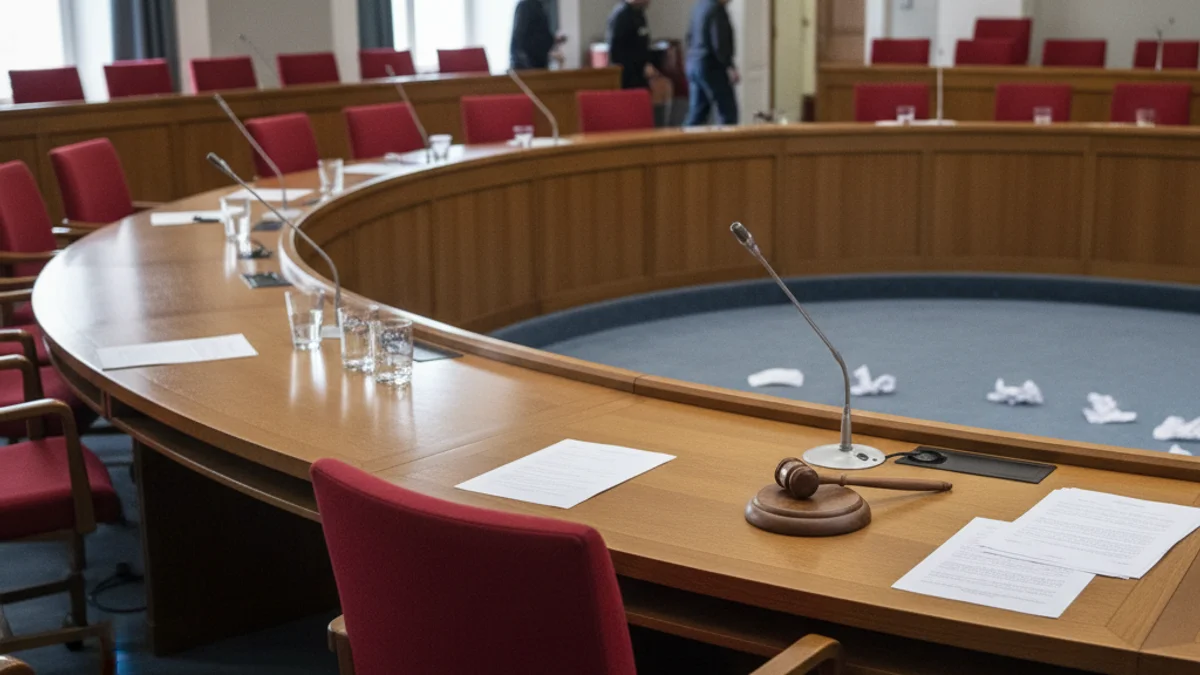
The session served to formalize the political divorce between the two BeGI councilors. Judit Vinyes announced her move to Aliança Catalana, becoming the official lead candidate for Sílvia Orriols' party in Berga for the upcoming municipal elections.
Meanwhile, Lluís Minoves became a non-attached councilor and received the only public applause of the evening for his intervention regarding the bus station issue. Minoves and former members of BeGI plan to create a new political formation called Arrelats, which will run in the municipal elections in Berga and five other towns.
“"If necessary, we will cut roads!"
The location of the temporary bus station is consolidating as the main headache for the governing team. Affected residents turned the question time into a popular assembly, interrupting Mayor Ivan Sànchez (CUP). The mayor attempted to ease tensions by stating, “If I were in your shoes, I would protest too.”
Finally, the second deputy mayor, Rosa Rodríguez (CUP), was recognized as the MVP (Most Valuable Councilor) of the plenary, highlighting her defense of the Catalan language, which is added to her extensive portfolio including Education, Cultural Rights, Popular Participation, Feminism, and LGTBI.