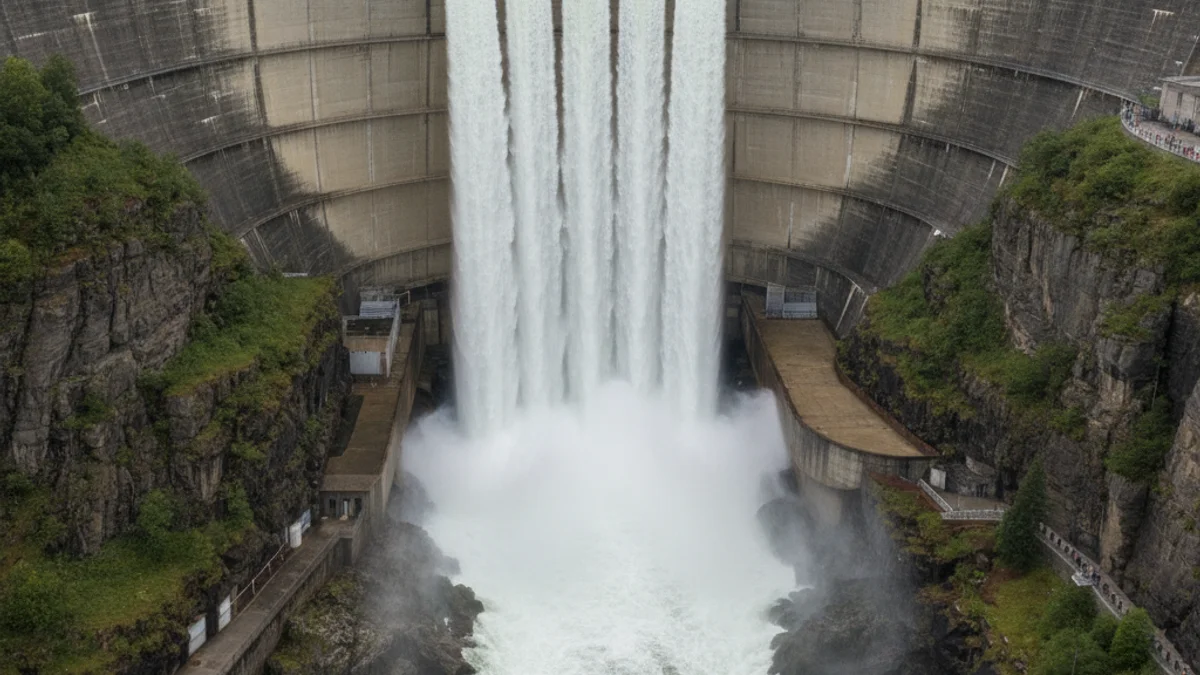
Although the Llobregat and Cardener reservoirs were initially excluded from planned releases, the intensity of the rainfall forced the ACA to release water from La Baells for five days, from January 15 to 19.
“"The objective of this measure was to increase the reserve in the reservoirs with higher volumes, thus absorbing the water entering from the river headwaters, without this implying a loss of resources."
This management was crucial in preventing problems in the middle and final stretches of rivers such as the Ter and the Llobregat. The Ter system released up to 75 m³/s, while La Baells reached 10 m³/s. Darnius Boadella also released 10 m³/s and Foix, 3 m³/s.
Despite the controlled release, which began to decrease after January 19, La Baells slightly increased its reserves, moving from 85% to 87.77% occupancy. Reservoirs like La Llosa del Cavall and Sant Ponç also gained volume, though they remained below 90% of total capacity.
According to the ACA, the reservoir management prevented a downstream flow increase of at least 400 m³/s in the Ter and 90 m³/s in the Muga, avoiding surges that could have been much higher.