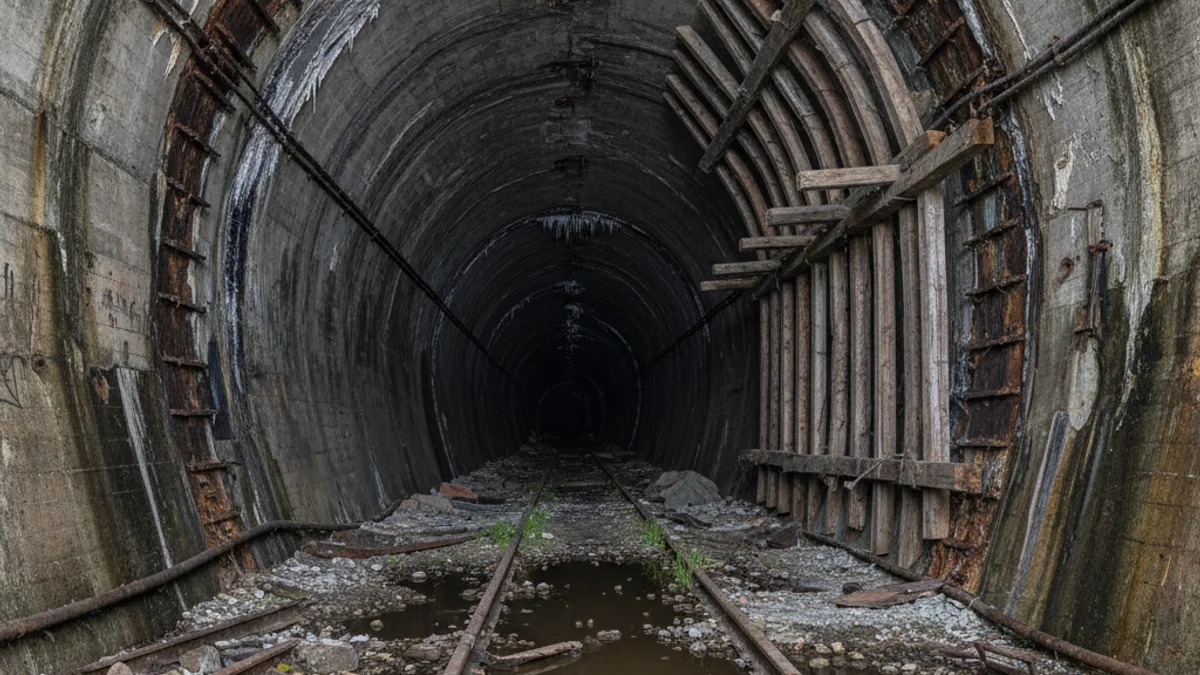
The Rodalies network has 230 tunnels, the majority of which are decades old. The Garraf tunnels, built in 1881 to connect Barcelona and Vilanova i la Geltrú, are one of the most critical points. The passage of time and, especially, the effects of seawater have caused their current condition to be very poor, with visible corrosion and pillars located right at the edge of the cliff.
“"Seawater affects rocks and infrastructure much more than fresh water. The limestone rocks of this Garraf massif are fragile and break easily."
Given the need for renovation, Adif will execute emergency works in the most critical points of Garraf within a month. Simultaneously, a project is being drafted to expand the mountain-side tunnels with a second track, leaving the sea-level tunnels as evacuation corridors. This work, which has no schedule yet, is expected to last at least four years. Expert Joan Carles Salmeron, director of Terminus. Centre d'Estudis del Transport, questions this solution, suggesting the construction of a completely new two-track tunnel.
“"Nothing has been done in these tunnels to adapt to European regulations. We are paying fines!"
The other critical point is the Rubí tunnel, closed for days, affecting the R8 line of Rodalies and almost all freight traffic from the port of Barcelona to Europe. An Adif report from 2022 already described its condition as “deficient structural state.” Although a comprehensive reform valued at 23 million euros was tendered last August, the work has not yet been awarded, which would have prevented the current logistical blockage. These problems extend to other infrastructures such as the La Molina and La Plana-Picamoixons tunnels, currently out of service.