The visitor surge is significant, rising from 4,424 visits recorded in 2024 to 6,917 people who visited the center in 2025. This boost is largely attributed to a fivefold increase in school groups, now totaling around 1,500 students, and a rise in international visitors, approaching 450.
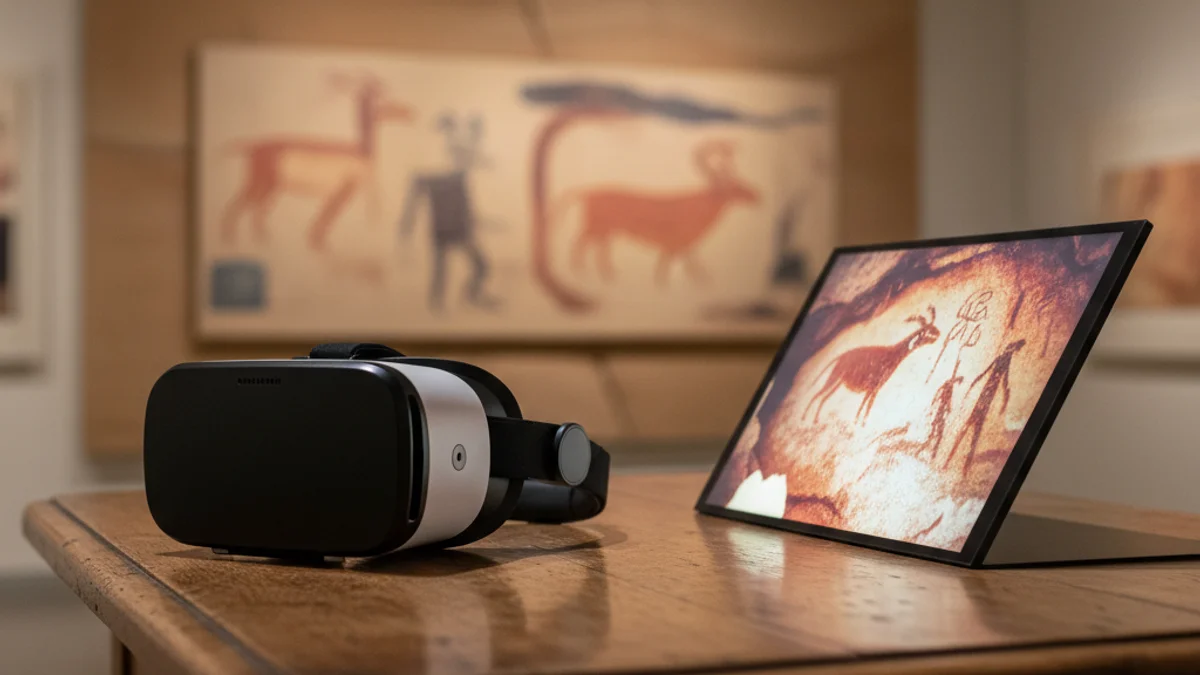
The project The Eyes of History, promoted by the Department of Culture, offers an experiential and immersive approach to rock art. It includes a room dedicated to the discovery of the paintings and another for experimentation, featuring tactile screens and projectors, reinforcing the focus on Levantine art.
“"Technology is a tool to bring culture and history to a greater number of people and generates possibilities for economic diversification in the territory."
The immersive visual experience uses virtual reality goggles to take visitors on a journey through time, recalling the discovery of the rock art complex by the geologist Ceferí Rocafort. Furthermore, it seeks to prompt a deep reflection on gender roles in past societies, an approach previously overlooked by scholars.
The new museography centers around a scale reproduction of the rock shelter and is complemented by a multimedia guide accessible with sign language interpretation and audio descriptions. The success in El Cogul has allowed the project to be replicated in other locations such as the Cartoixa d’Escaladei, the Vall de Boí Complex, and the Castell de Miravet.